A mattress can feel amazing for five minutes in a showroom and still be wrong by the third night at home. That is why learning how to choose mattress firmness matters more than most shoppers expect. Firmness affects comfort, pressure relief, spinal support, and even whether you wake up feeling rested or sore.
The tricky part is that there is no single “best” firmness for everyone. A mattress that feels perfectly supportive for one person can feel hard as a board to another. Your sleeping position, body weight, body shape, and any back or shoulder discomfort all change what the right firmness feels like.
What mattress firmness actually means
Firmness is simply how soft or hard a mattress feels when you lie down on it. It is not the same as support, even though people often use those words interchangeably. A mattress can feel plush on top and still support your spine well. Another one can feel firm but create pressure points that make sleep uncomfortable.
Most mattresses sit on a firmness scale from soft to firm, often described as soft, medium soft, medium, medium firm, and firm. For many adults, medium to medium firm is the safest starting point because it balances cushioning with support. Still, starting point does not mean final answer. The right feel depends on your body, not just the label on the product page.
How to choose mattress firmness for your sleep position
Your usual sleeping position is one of the biggest clues.
Side sleepers usually need more pressure relief
If you sleep on your side, your shoulders and hips press more deeply into the mattress. A surface that is too firm can push back too much, creating numbness, soreness, or frequent tossing and turning. Most side sleepers do better with a medium soft to medium mattress, or sometimes medium firm if they are heavier and need more pushback underneath.
The goal is simple. You want enough softness for the shoulders and hips to sink in slightly, but not so much that your waist collapses and throws off spinal alignment.
Back sleepers usually prefer balanced support
Back sleepers often feel best on medium to medium firm mattresses. This range helps support the lower back while still allowing the hips to settle naturally. If the mattress is too soft, the hips may sink too much. If it is too firm, the lower back may not get enough contouring.
This is one reason medium firm is so popular. It works for a wide range of body types and tends to feel stable without being harsh.
Stomach sleepers usually need a firmer feel
Stomach sleeping places more stress on the lower back, especially if the hips sink too far. A firmer mattress usually helps keep the body flatter and more supported. Most stomach sleepers are better off in the medium firm to firm range.
If you sleep partly on your stomach and partly on your side, the choice gets more nuanced. In that case, a medium firm mattress often gives the best compromise.
Body weight changes how firmness feels
This is where many people get confused. Mattress firmness is not absolute. It changes based on how much weight presses into the bed.
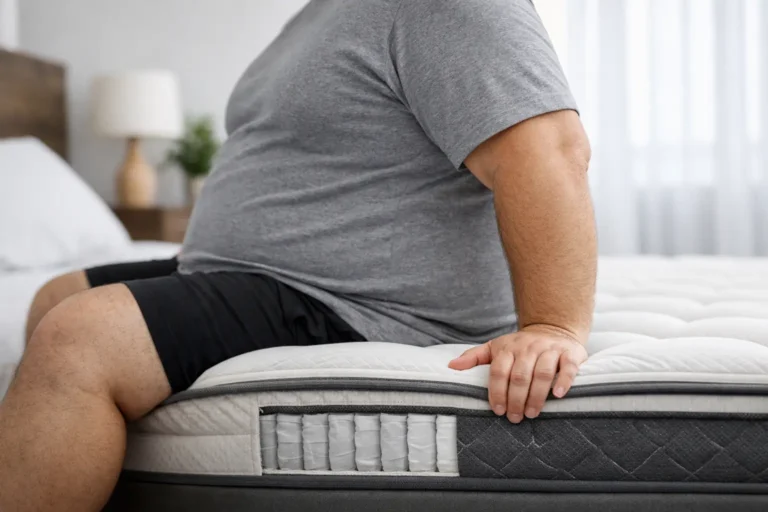
Lighter sleepers often experience mattresses as firmer because they do not sink in as much. A mattress labeled medium firm may feel quite firm if you have a smaller frame. Heavier sleepers usually experience the same mattress as softer because they compress the comfort layers more deeply.
As a general guide, lighter adults often prefer soft to medium options, average-weight adults tend to do well with medium to medium firm, and heavier adults usually need medium firm to firm for proper support. That does not mean every heavier sleeper wants a rock-hard mattress. It means they typically need stronger support layers and less sinkage to stay comfortable through the night.
Pain points matter more than trend labels
A lot of shoppers ask whether soft or firm is better for back pain. The honest answer is that it depends on the type of pain, your sleeping position, and how your body carries weight.
If you wake up with pressure in your shoulders or hips, your mattress may be too firm. If you wake up with lower back strain or feel like your midsection drops too deeply, your mattress may be too soft. People with back concerns often do well on medium firm mattresses because that range supports alignment without feeling overly rigid.
That said, comfort should never be dismissed. If a mattress supports your spine in theory but feels uncomfortable enough to keep you from sleeping deeply, it is not the right mattress for you.
Couples need to choose firmness differently
For couples, mattress firmness is rarely just about one body. If two sleepers have different builds or sleeping positions, one mattress will naturally feel different to each person.
This is why medium or medium firm is often the safest shared choice. It tends to offer enough support for back and combination sleepers while still giving side sleepers some pressure relief. If one partner is much lighter and the other much heavier, the gap in feel can be more noticeable, so construction becomes just as important as firmness level.
Motion isolation also matters. A mattress with good cushioning and stable support can reduce movement transfer, which helps if one partner turns often or gets in and out of bed at different times.
How to test mattress firmness the right way
If you are trying mattresses in a showroom, do not just sit on the edge and press with your hand. That tells you very little. Lie down in your normal sleeping position for at least 10 to 15 minutes. If you switch positions at night, test those too.
Pay attention to a few things. Do your shoulders and hips feel cushioned or jammed? Does your lower back feel supported? Do you feel like you are lying on the mattress or sinking too far into it? Most importantly, can you imagine staying in that position comfortably for hours, not minutes?
If you are shopping online, read the firmness description carefully, but do not stop there. Look for details about who the mattress is designed for, such as side sleepers, back support, cooling needs, or heavier body types. Honest guidance matters more than a generic firmness score.
Material affects firmness feel
Two mattresses with the same firmness rating can feel completely different because of the materials inside.
Memory foam tends to feel more contouring and pressure relieving. It can make a medium mattress feel softer because of the hug around the body. Latex and some responsive foams feel springier and more lifted, so the same medium rating may feel more supportive and less sink-in. Hybrid mattresses often combine cushioning comfort layers with pocketed coils underneath, giving a balanced feel that many households like.
This is especially important in warm climates and compact urban homes where cooling, airflow, and all-night comfort matter. A mattress should not only match your firmness needs but also suit how you sleep in real home conditions.
Common mistakes when choosing mattress firmness
One of the biggest mistakes is choosing the firmest mattress just because it sounds healthier. Firmer is not automatically better. Good sleep comes from alignment plus comfort, not from hardness alone.
Another mistake is choosing based only on a quick first impression. Softer mattresses often feel inviting at first touch, while firmer models can feel more supportive after 20 minutes. First feel matters, but long-night comfort matters more.
People also overlook lifestyle reality. If your mattress needs to work for different sleeping positions, a partner, or changing comfort needs over time, it is smarter to choose a balanced feel than an extreme one.
A practical way to narrow it down
If you want a simple path forward, start with your dominant sleeping position, then adjust for body weight and any pain points. Side sleeper with shoulder pressure? Start around medium. Back sleeper with lower back discomfort? Medium firm is a strong candidate. Stomach sleeper or heavier sleeper needing more support? Look closer at medium firm to firm.
If you share a bed and want the safest all-around option, medium firm usually deserves serious consideration. It is popular for a reason. It handles a wide range of needs without feeling too extreme in either direction.
At Catnap Lair, this is exactly why many homeowners ask for guidance instead of guessing from a product label alone. The right mattress firmness is not about chasing trends. It is about matching comfort, support, and budget to the way you actually sleep.
A good mattress should feel like a relief at the end of the day, not another decision you second-guess after delivery. Take your time, test honestly, and choose the firmness that helps your body settle in and stay asleep.