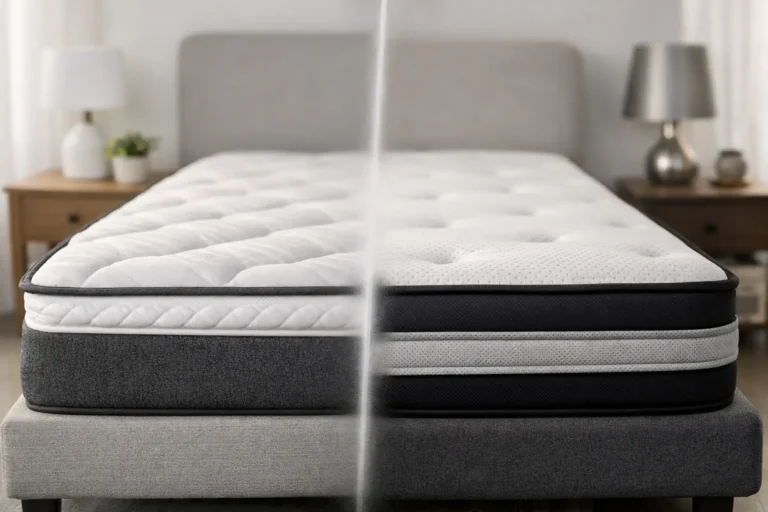
A mattress can feel wonderfully soft in a showroom and still leave you waking with a sore lower back two weeks later. That is why mattress support levels explained properly should go beyond the familiar soft, medium, and firm labels. Support is about how well a mattress holds your body in a healthy, comfortable position through the night – not how hard the surface feels when you first lie down.
For couples, first-time homeowners, and anyone replacing an aging bed, the goal is simple: find a mattress that keeps your spine aligned, relieves pressure where you need it, and feels comfortable enough to sleep on night after night. Those needs overlap, but they are not the same thing.
What Mattress Support Actually Means
Mattress support is the mattress’s ability to resist excessive sinking and keep your body level. When you lie on your side, your shoulders and hips should sink in just enough while your waist stays supported. When you lie on your back, your lower back should feel gently held rather than pushed up or left hanging.
A supportive mattress does not have to feel firm. A high-quality medium mattress can offer excellent support through a well-built pocketed coil core, dense foam layers, or a hybrid construction. On the other hand, a very firm mattress with little contouring may create pressure at the shoulders and hips, making it uncomfortable even if it feels solid.
Think of firmness as the sensation at the surface, while support is what happens underneath your body. Both matter. The right balance is what makes a mattress feel like it was chosen for you rather than simply chosen from a label.
Mattress Support Levels Explained: Soft to Firm
Most mattresses are described on a firmness scale from 1 to 10, though there is no universal industry standard. A 6 from one brand may feel closer to a 5 or 7 from another. Use the scale as a starting point, then consider your sleeping position, body type, and any areas that regularly feel stiff or sore.
Soft support: around 3 to 4 out of 10
Soft mattresses allow deeper contouring, especially around the shoulders and hips. They can be a comfortable choice for lighter-weight side sleepers who want noticeable pressure relief and a plush, cradling feel.
The trade-off is that a soft mattress may not provide enough resistance for heavier sleepers, stomach sleepers, or anyone who tends to sink around the hips. When the midsection drops too far, the lower back can curve out of alignment. Soft does not automatically mean unsupportive, but the support layers need to be substantial enough to prevent that hammock effect.
Medium support: around 5 to 6 out of 10
Medium and medium-firm mattresses are popular because they suit a wide range of sleepers. They offer enough cushioning for side sleeping while retaining enough pushback for back sleeping. For couples with different preferences, this range is often the most practical place to begin.
A medium mattress is not a compromise in a negative sense. With quality materials, it can be a genuinely versatile sleep surface that adapts to changing positions. This is especially useful for combination sleepers who shift between their side and back during the night.
Firm support: around 7 to 8 out of 10
Firm mattresses have less surface give and stronger resistance against the body. They often work well for back sleepers, stomach sleepers, and larger-bodied sleepers who need extra support through the pelvis and lower back.
However, firm should not mean flat or unforgiving. If your shoulders ache or your arm goes numb while side sleeping, a mattress may be too firm for your pressure points. A firm hybrid or pocketed-coil mattress with a comfort layer can offer the stable feel you want without creating a hard sleeping surface.
Extra-firm support: around 9 to 10 out of 10
Extra-firm mattresses are designed for sleepers who prefer very little sink or need a highly stable surface. They are a more specialized choice and tend to suit some stomach sleepers or heavier individuals. For most people, an extra-firm mattress can feel too rigid, particularly if they sleep on their side.
Before choosing this level, consider whether you want true extra firmness or simply better underlying support. A well-designed firm mattress is often enough.
Match Support to Your Sleeping Position
Your usual sleep position is one of the strongest indicators of the support level that may suit you. It is not a strict rule, but it gives you a much better starting point than choosing based on a quick press with your hand.
Side sleepers generally need pressure relief at the shoulders and hips, with enough support through the waist to keep the spine straight. A medium to medium-soft mattress often works well, especially for lighter sleepers. Side sleepers with broader shoulders or more pronounced hips may appreciate a mattress with responsive comfort foam or a plush top layer.
Back sleepers usually need even support across the body, particularly under the lumbar area. Medium-firm is a reliable starting point because it prevents the hips from sinking too deeply while still allowing the natural curve of the lower back to rest comfortably.
Stomach sleepers need the strongest resistance around the hips. If the pelvis sinks, the lower back is forced into an uncomfortable arch. A firm mattress is often the better choice, though a medium-firm option can work for lighter stomach sleepers.
Combination sleepers should look for responsive materials that make changing position easy. Very soft memory foam can feel cozy but may make movement harder for some people. Hybrid mattresses, with comfort layers over a supportive coil base, often provide a useful mix of contouring, bounce, and edge support.
Body Weight Changes How Support Feels
The same mattress can feel completely different to two people. A lighter person may find a medium-firm mattress quite firm because they do not sink deeply into the comfort layers. A heavier person may experience that same mattress as softer and may need a more supportive core to avoid excessive sink.
As a general guide, lighter sleepers often enjoy soft to medium support, average-weight sleepers frequently do well with medium to medium-firm, and heavier sleepers may prefer medium-firm to firm. These are not fixed categories. A person’s shape, sleeping position, and comfort preference still matter more than a number alone.
For couples with a noticeable weight difference, prioritize a mattress that supports the heavier sleeper without feeling uncomfortably hard for the lighter sleeper. A medium-firm hybrid is often worth considering because its layers can provide both surface comfort and stronger deep support. A mattress with good motion isolation also helps when one person gets up earlier or changes position often.
Materials Matter as Much as the Firmness Label
Support comes from construction, not just the word printed on a product page. Pocketed coils can provide targeted support and better airflow, while a strong foam base can create a stable, quiet feel. Hybrid mattresses combine these benefits and are a common choice for sleepers who want both cushioning and structure.
Memory foam is known for close contouring and pressure relief. It can be excellent for side sleepers and people who enjoy a hugged sensation, but its quality and density make a major difference. Low-quality foam may soften quickly and lose the support you paid for.
Latex and responsive foam tend to feel more buoyant. They contour without the deep, slow sink associated with traditional memory foam. This can suit sleepers who want pressure relief but dislike feeling stuck in the mattress.
Do not overlook edge support either. Strong edges make it easier to sit on the side of the bed, help couples use more of the sleeping surface, and can be especially useful in compact bedrooms where a larger bed size needs to work hard for the space.
Signs Your Current Mattress Has the Wrong Support Level
Morning discomfort can be a clue, especially when it improves after you have been moving around for a while. Lower-back soreness may point to hips sinking too deeply or a support core that has weakened. Shoulder and hip pain can mean the surface is too firm and not relieving pressure adequately.
Visible sagging, a dip where you usually sleep, or the feeling of rolling toward the center are clearer signs that the mattress is no longer supporting you properly. A new mattress cannot fix every sleep issue, but persistent discomfort should not be treated as normal.
When testing a mattress, lie in your usual sleep position for more than a minute. Notice whether your lower back feels supported, whether your shoulders can relax, and whether turning over feels natural. If you share the bed, test it together. Comfort is personal, but the right choice should make both sleepers feel considered.
At Catnap Lair, the best mattress recommendation begins with an honest conversation about how you sleep, not a push toward the firmest or most expensive option. Give yourself permission to ask about the mattress core, comfort layers, cooling features, and support for your body type. A mattress is one of the few home purchases you use every single night, so choosing with care can make your bedroom feel like the place it should be: restful, supportive, and truly yours.