A bed can look perfect in a showroom and still feel wrong after two weeks at home. Usually, the problem is not the mattress alone. Bed frames affect height, support, storage, cleaning access, room flow, and how restful the whole setup feels day to day. If you are comparing bed frames for a new home or an overdue bedroom upgrade, the smartest choice starts with how you live, not just how the bed looks.
What bed frames actually change
Most people begin with style. That makes sense, because the frame is the visual anchor of the room. But the practical side matters just as much. A frame changes how easy it is to get in and out of bed, whether your mattress stays properly supported, and whether your bedroom feels open or cramped.
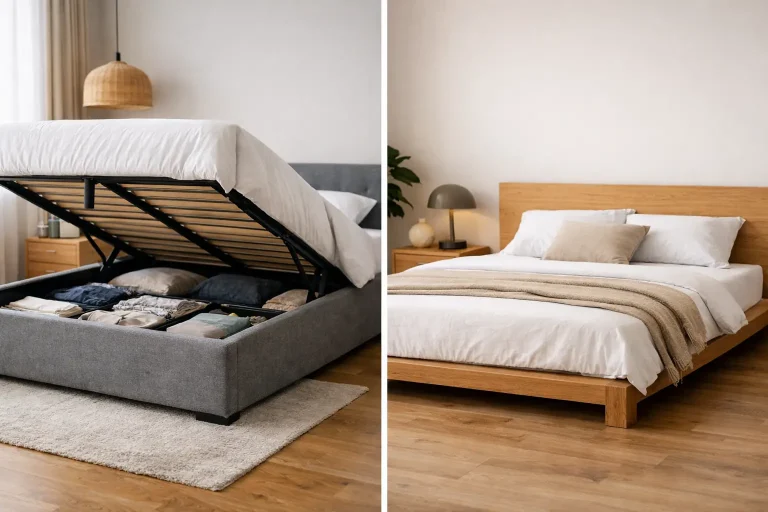
This is especially true in smaller homes, where every inch has to work harder. A bulky frame with a tall headboard may look impressive online but can make a compact room feel tighter. On the other hand, a low-profile platform design can create a cleaner, more spacious look. If storage is limited, a bed with drawers or lift-up compartments can do the work of an extra cabinet without taking more floor space.
That is why the best frame is rarely the most decorative one. It is the one that fits your routine, your room, and your budget without creating new problems.
Start with your room before you shop bed frames
Before you compare materials or colors, measure your room properly. Not just wall to wall, but the usable space around the bed. You want enough clearance to open wardrobe doors, walk comfortably, and clean around the frame without awkward squeezing.
A queen bed may be the default choice for many couples, but it is not always the best fit. In a tighter bedroom, a frame with thick side panels or an oversized headboard can make a standard mattress footprint feel much larger. This is where frame design matters more than many shoppers expect.
Platform bed frames are a strong option when you want a neat silhouette and minimal bulk. They usually suit modern interiors and make the room feel less crowded. Storage bed frames are ideal when built-in organization matters more than visual lightness. Pullout or drawer styles can be useful in family homes, guest rooms, or shared spaces where hidden storage makes everyday life easier.
If you are furnishing a child’s room or planning for sleepovers, bunk beds or pullout beds may offer better long-term flexibility than a standard setup. The trade-off is that they need thoughtful placement and should be chosen for safety and ease of use, not novelty.
The right type depends on how you use the room
A main bedroom has different needs from a guest room. So does a room shared by siblings, or a studio where the sleeping area blends into the living space.
For a master bedroom, comfort and convenience usually come first. Many buyers prefer storage frames here because they reduce clutter and help organize bedding, off-season clothes, or extra household items. If your room already has enough storage, a platform or floating-style frame can create a cleaner hotel-like look.
For guest rooms, simplicity often wins. A sturdy frame that is easy to maintain and works with a range of mattress types is usually the safer choice. You do not need every feature, but you do want dependable support and a style that will not date quickly.
For family homes, practical options tend to outperform trendy ones. Drawer beds, pullout beds, and even hidden wall beds can make a room more useful when space has to serve more than one purpose. That kind of flexibility matters a lot in compact urban layouts.
Material matters, but not in the way people assume
Many shoppers ask whether wood or metal is better. The more honest answer is that construction quality matters more than the headline material.
A well-built wooden frame can feel warm, stable, and timeless. It suits many bedroom styles and often gives a more substantial feel. But lower-quality wood products may loosen over time if the joinery is weak. Metal frames can be durable and lighter-looking, which helps in smaller spaces, but poor construction may lead to squeaking or movement.
Upholstered frames add softness and visual comfort, especially with padded headboards. They work well for people who read or watch TV in bed. The trade-off is maintenance. Fabric can collect dust, and lighter tones may need more care in homes with kids or pets.
Instead of chasing a material category, pay attention to stability, slat support, finishing quality, and how the frame feels when weight is applied. A good frame should feel secure, balanced, and properly engineered for daily use.
Support is not just the mattress’s job
People often invest heavily in a mattress and treat the frame as a secondary decision. That can backfire. Even an excellent mattress performs poorly if the base underneath does not support it correctly.
The spacing and strength of the slats matter. Center support matters, especially for larger sizes. The overall design has to hold weight consistently without sagging or shifting. If the frame flexes too much or lacks reinforcement, it can affect comfort and shorten the useful life of the mattress.
This is why mattress-and-frame compatibility should always be checked together. Some mattresses work best on flat, even support. Others need closely spaced slats. If you are buying both at once, it makes sense to match them as a system rather than as separate purchases.
Style should work with your room, not compete with it
A bed frame is usually the largest furniture piece in the bedroom, so it sets the tone quickly. But good style choices are often quieter than people expect.
If your room is already busy with feature walls, curtains, or statement lighting, a simpler frame usually creates better balance. If the rest of the room is clean and minimal, a textured upholstered headboard or wood-grain finish can add warmth without overwhelming the space.
Tall headboards can look elegant, but they also dominate smaller rooms. Floating and platform styles often feel lighter and more current. Princess beds or more decorative designs can make sense for themed rooms, but they should still be judged on build quality and long-term practicality.
The safest approach is to choose a frame that still looks right after trends move on. Bedrooms should feel restful. A frame that fights for attention every time you walk in usually gets old fast.
Budget wisely, not cheaply
Price matters. For most households, it should. But the cheapest frame is not always the best value, especially if it starts wobbling, squeaking, or looking worn far earlier than expected.
A better way to think about budget is cost over time. If a slightly higher-quality frame lasts years longer, supports your mattress properly, and includes useful storage, it may save money and frustration in the long run. This is also where direct pricing and flexible payment options can make a real difference for homeowners furnishing an entire space at once.
At Catnap Lair, this is the kind of buying decision we guide customers through every day – balancing comfort, layout, function, and price without pushing features they do not need.
Questions worth asking before you buy bed frames
A good purchase usually comes down to a few honest questions. Do you need storage or just like the idea of it? Will the bed make the room easier to live in, or harder to move around? Are you choosing a frame for looks alone, or for the way you actually sleep, clean, and organize?
It also helps to think a year ahead. If your needs change, will the frame still make sense? A newlywed couple may want extra storage now. A family with young kids may need a pullout option later. A guest room may eventually become a study or nursery. The more adaptable the frame, the better the long-term value.
The best bed frames do not just hold a mattress. They support better routines, better use of space, and a bedroom that feels easier to live in every day. Choose with that in mind, and the right frame tends to become obvious.