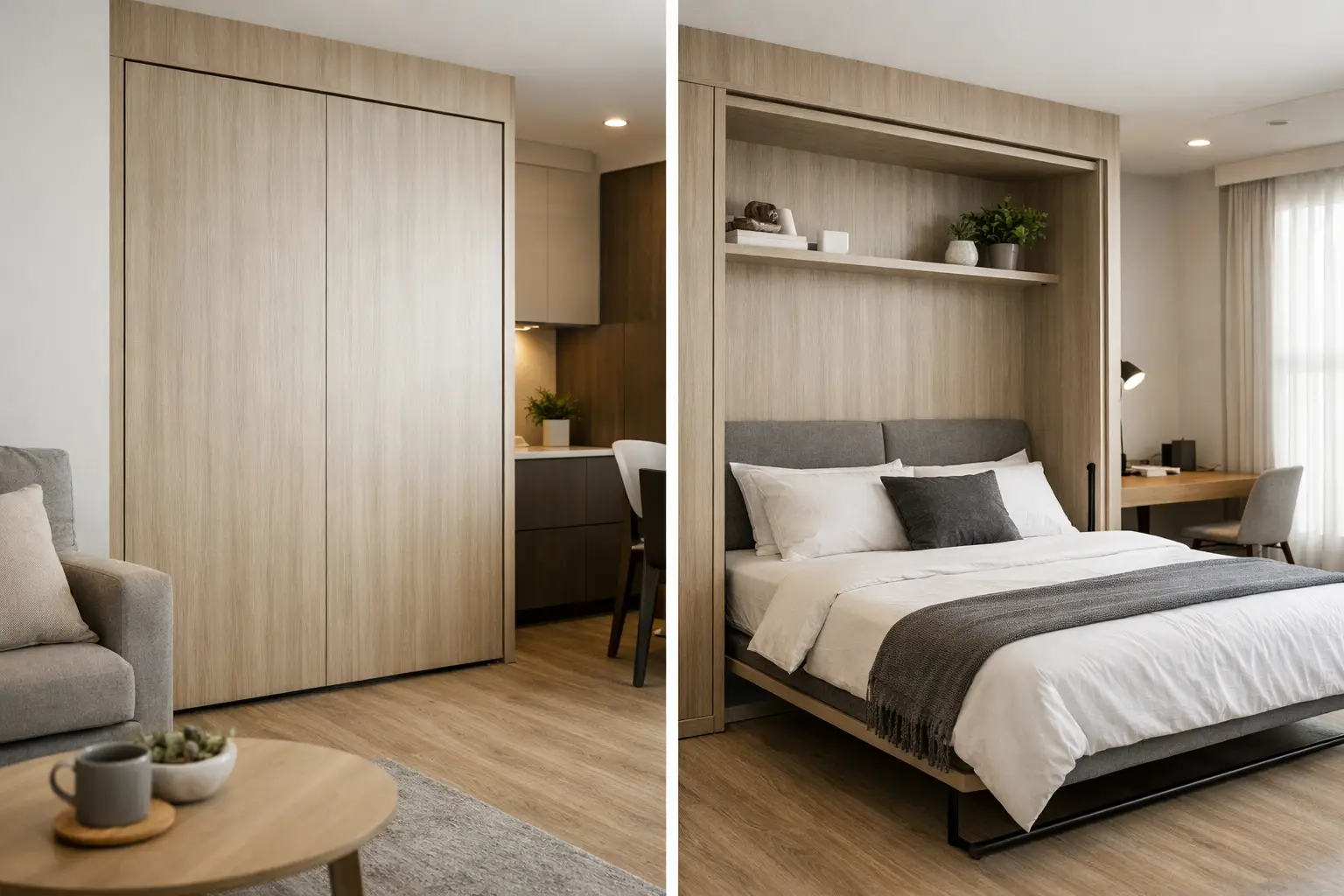
A spare room is a luxury in many homes, but a room that can switch between guest bedroom, work zone, and family space is often a smarter use of the floor plan. A hidden wall bed Singapore homeowners choose can make that possible without asking you to live around a permanently open bed. Fold it down when someone stays over, then close it away to reclaim valuable room during the day.
Also called a Murphy bed or fold-down wall bed, this solution is not simply a mattress tucked behind a panel. It is a wall-mounted or cabinet-integrated bed mechanism designed to lower safely into a sleeping position and store vertically when not in use. The result can look polished and intentional, especially when planned as part of a wardrobe, study, or full-height storage wall.
Why hidden wall beds suit compact homes
For BTO flats, condos, and apartments where every room has a job to do, the biggest advantage is flexibility. A traditional queen bed can take up much of a bedroom before you add a bedside table, wardrobe, and walking clearance. A hidden wall bed gives that same footprint back during waking hours.
This is especially useful for a home office that occasionally hosts parents, relatives, or friends. Instead of dedicating the room to an unused guest bed for most of the year, you can keep a proper desk setup, exercise area, or children’s play space. When needed, the bed comes down in minutes.
It can also work well in a living area for households that want extra sleeping capacity but do not want a sofa bed as the main solution. A sofa bed is convenient, but it may not provide the support or mattress choice some guests need. A wall bed can often accommodate a separate, proper mattress, depending on the system specifications.
There is a trade-off: a hidden bed saves open floor space, but it needs a dedicated wall and sufficient clearance when lowered. The room does not become bigger. It simply becomes more useful at different times of day.
Choosing a hidden wall bed in Singapore
The best design starts with how the room is actually used, not with the bed size alone. Think about who will sleep on it, how often it will be opened, and what must remain usable when the bed is down. A bed for occasional overnight guests has different requirements from one used every night by an adult child or live-in family member.
Start with the open-bed footprint
Measure the wall width, ceiling height, and floor depth in front of the wall. Then measure again with real furniture in mind. When the bed is open, you still need practical access around it. A study chair, loose rug, coffee table, or storage ottoman may need to move before bedtime.
Pay attention to obstructions that are easy to miss during planning. These include ceiling fans, low pendant lights, curtain tracks, windows, electrical outlets, air-conditioning units, skirting details, and doors that swing into the bed zone. An installer should also assess whether the selected wall and fixing method are suitable for the load and motion of the mechanism.
If the room has a low ceiling, a horizontal wall bed may be an option. It opens sideways rather than vertically and can suit a wider wall. A vertical model often gives a more familiar bed layout, while a horizontal model may leave useful cabinetry above it. The right choice depends on the room proportions and the storage you need.
Choose mattress compatibility carefully
A wall bed is only as comfortable as the sleeping setup inside it. Do not assume every mattress will fit. Each mechanism has limits for mattress thickness, weight, and dimensions. A mattress that is too thick may prevent the unit from closing correctly, while one that is too heavy can affect smooth lifting and lowering.
For occasional guests, a medium-feel mattress is usually a safe starting point because it suits a wider range of sleepers. For more frequent use, prioritize support, pressure relief, and a profile approved for the wall bed frame. Foam, latex, hybrid, and spring mattresses can all be considered, but the final choice must match the system’s requirements.
This is where a one-stop furnishing consultation can prevent an expensive mismatch. Catnap Lair can help homeowners coordinate the bed frame concept with a mattress that fits both the mechanism and the comfort needs of the people using it.
Make storage part of the plan
A hidden wall bed often looks best when it belongs to a larger built-in composition. Side cabinets can hold linens, pillows, and guest essentials. Open niches can display books or decor, while a fold-down desk or compact shelf may make the unit more useful during the day.
However, avoid adding features just because they look impressive in a showroom. Every extra cabinet, shelf, and light fitting affects budget, installation complexity, and visual weight. In a narrow room, a clean bed panel with slim storage may feel calmer than a wall packed with compartments.
Safety and daily use matter more than appearance
A properly designed hidden wall bed should feel stable, controlled, and straightforward to operate. Modern systems generally use springs, pistons, or counterbalance mechanisms to reduce the effort required to open and close the bed. Even so, the installation quality matters as much as the hardware itself.
Ask how the unit is anchored, what wall conditions are required, and whether anti-tip or locking features are included. The bed should not be treated as a DIY cabinet project, particularly in a home with children. Children should not operate it alone, hang on the frame, or play around it while it is being opened or closed.
Consider daily habits too. Some models allow bedding to remain neatly in place when the bed is folded up, while others may require you to remove bulky pillows or thicker duvets. If you expect to open the bed every evening, a simple setup process will make a real difference. A design that looks good but feels troublesome after a long workday is unlikely to be used as intended.
Wall bed versus storage bed or sofa bed
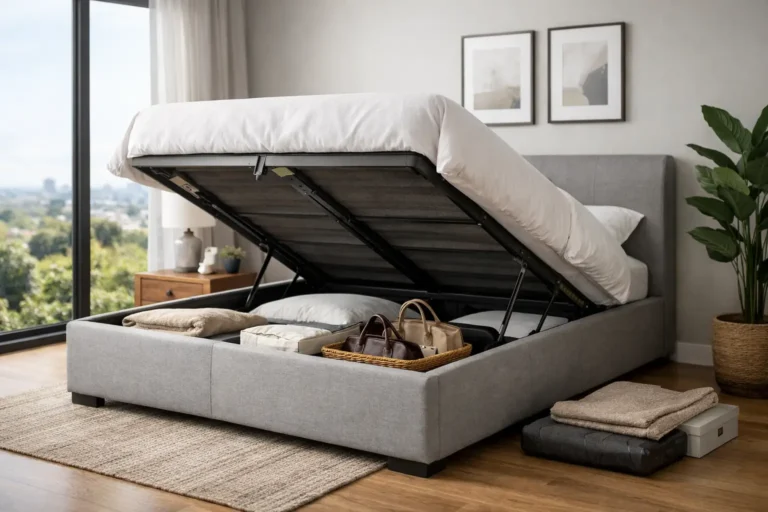
A hidden wall bed is not automatically the best space-saving choice. If the room is used as a bedroom every night, a storage bed may offer more convenience. It keeps the bed ready to use while giving you under-bed space for luggage, extra bedding, or seasonal items.
A pullout bed can be practical for siblings or children who regularly share a room. It provides an extra sleeping surface with less installation work and is usually easier to reposition later. A sofa bed may be the better fit in a living room where guests stay only once in a while and daytime seating is the priority.
The hidden wall bed becomes most valuable when a room genuinely needs two identities. It is a considered investment in flexibility, not just a way to hide a bed. If you only need more storage, look first at storage beds and wardrobes. If you need a study to transform into a comfortable guest room without leaving a bed visible all year, a wall bed has a clear advantage.
Questions to settle before you buy
Before committing, confirm the intended mattress size, the mattress thickness and weight range, the exact wall and floor clearances, and the installation timeline. Ask whether delivery, assembly, and wall fixing are included, as these details affect the real project cost.
You should also think ahead. Will the room’s role change after a new baby arrives, when parents visit more often, or when work-from-home needs shift? Furniture that adapts with the household can offer better long-term value than furnishing a room for only one short-term purpose.
A hidden wall bed should make your home feel less compromised, not more complicated. When the dimensions, mattress, storage, and installation are planned together, it gives you a welcoming place to sleep at night and a room you can fully live in during the day.