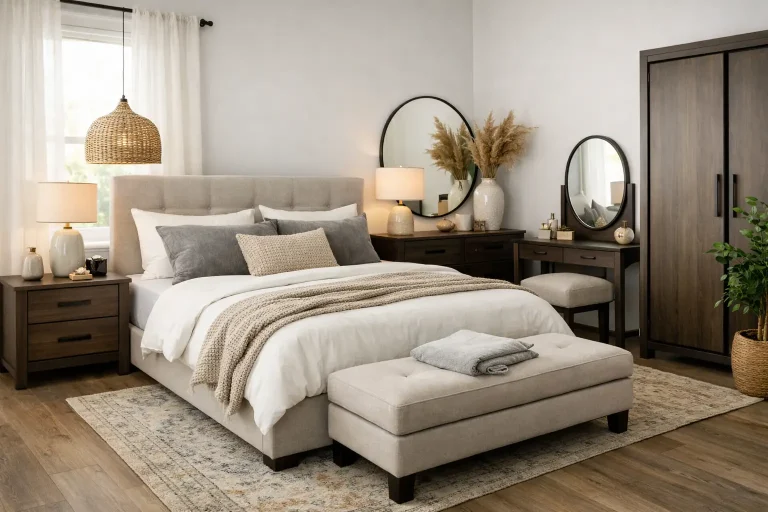

A bed frame can look perfect online and still be the wrong choice the moment it lands in your bedroom. Maybe it blocks the wardrobe swing, eats up walking space, creaks after a few months, or sits too high for your mattress. If you’re wondering how to choose bed frame options without wasting money or floor space, the right answer starts with your room, not the product photo.
For most homeowners, the best bed frame is the one that supports good sleep, fits the layout, and makes daily life easier. That sounds simple, but it usually comes down to a few practical decisions: size, height, storage, material, support, and how long you plan to live with it. A frame for a first apartment, a new BTO bedroom, or a growing family home may not be the same choice at all.
How to choose bed frame for your room first
Before you compare styles, measure the room properly. Not just wall to wall, but the actual usable space after accounting for doors, wardrobes, side tables, windows, and walking clearance. This is where many buyers get caught. A queen bed may technically fit, but if it leaves only a narrow path around the bed, the room will feel cramped every day.
In compact bedrooms, clearance matters as much as mattress size. You want enough room to get in and out comfortably, open drawers, and change bedsheets without a struggle. If the bedroom is tight, a storage bed with side drawers may sound smart, but those drawers still need space to open. In some layouts, a lift-up storage bed makes more sense because it uses vertical access instead of side clearance.
Bed height matters too. A low platform frame can make a small room look cleaner and more open, but it may not be ideal for everyone. If you prefer easier entry and exit, especially after a long workday or if you share the bed with older family members, a medium-height frame often feels more comfortable.
Match the frame to your mattress
A bed frame is not just a visual base. It is part of your sleep setup. The wrong frame can reduce mattress support, affect airflow, and shorten the lifespan of the mattress itself.
Start with exact sizing. A mattress should sit securely on the frame without overhang or obvious gaps. Then check the support system. Some mattresses work well on closely spaced slats, while others perform better with stronger platform support. Heavier mattresses, including many hybrid models, usually need a sturdier frame with better weight distribution.
This is also where headboard height and overall bed profile come into play. If you already own a thick mattress, pairing it with a tall bed frame can make the sleeping surface feel overly high. On the other hand, a thinner mattress on a low frame may feel too close to the floor for your comfort. The best result is a balanced overall height that feels easy to use and looks proportionate in the room.
Think about your lifestyle, not just the design
A bed frame should fit the way you live. If you are furnishing a master bedroom and need hidden storage for spare bedding, luggage, or seasonal items, storage becomes a real priority, not a bonus feature. If you have kids sharing a room or frequent guests, a pull-out or bunk setup may solve two problems at once.
This is why there is no single best answer to how to choose bed frame styles. It depends on what the room needs to do. A minimalist platform bed may suit a couple who value clean lines and already have enough wardrobe space. A storage bed may be the smarter buy for homeowners trying to maximize every square foot. A guest room may benefit more from flexibility than from a statement design.
If you expect to move within a few years, think about assembly and transport too. Some bulky upholstered or storage models are excellent for long-term use but less convenient if you plan to relocate often.
Material affects more than looks
Wood, engineered wood, metal, and upholstered frames all have their place. The right one depends on your priorities.
Wooden and wood-look frames are popular because they feel warm and versatile. They suit many bedroom styles and can look timeless if the finish is kept simple. Engineered wood options can also offer good value, especially for budget-conscious homeowners, but build quality matters. Thickness, hardware, and internal support make a big difference in durability.
Metal frames are often lighter visually and sometimes easier on the wallet. They can work well in guest rooms, rental units, or more modern interiors. The trade-off is that lower-quality metal frames may shift or squeak over time if the joints are not well made.
Upholstered bed frames add softness and a more premium look. They are great if you like leaning against a padded headboard to read or watch TV. But fabric finishes need a bit more upkeep, especially in homes with young children, pets, or dust sensitivity.
The best choice is usually the one that balances comfort, maintenance, and price without forcing you to compromise on support.
Storage beds are useful, but not always the answer
Storage beds are especially popular in space-conscious homes, and for good reason. They help you reclaim wasted space under the bed and reduce the need for extra cabinets. For bedrooms with limited built-in storage, that can be a major advantage.
Still, storage should be practical, not automatic. If the room is small and the storage mechanism is awkward to access, you may stop using it altogether. Side drawers need side clearance. Front drawers need front clearance. Lift-up storage needs enough strength and convenience to open regularly.
It also helps to think about what will be stored. If you want quick access to daily-use items, drawers are more convenient. If you plan to keep less frequently used items like spare pillows or festive bedding, an ottoman-style lift-up base may work better.
For many urban households, especially those furnishing compact bedrooms, storage beds offer strong value. But the layout has to support the feature, otherwise it becomes expensive dead space.
Don’t ignore structure and stability
A bed frame can look polished in a showroom and still fail the real-life test if the internal structure is weak. Pay attention to frame thickness, center support, slat quality, joint construction, and weight capacity. These details matter more than trendy finishes.
If two frames look similar but one is significantly cheaper, there is usually a reason. That does not always mean the lower-priced option is bad, but it does mean you should check what has been reduced. Fewer support legs, thinner boards, weaker fittings, or lower-density upholstery can all affect durability.
This is where honest buying guidance matters. A good retailer should help you compare what is inside the frame, not just what appears in the photos. At Catnap Lair, that practical approach matters because most homeowners are not shopping for a showroom piece. They are buying something they need to sleep on every night.
Budget for the full setup
When people think about bed frame cost, they often focus only on the price tag of the frame itself. But the real budget should include the mattress, delivery, assembly, and how long the frame is likely to last.
A cheaper frame that needs replacing in a short time is rarely the best value. At the same time, the most expensive option is not automatically the smartest choice either. If you are furnishing a guest room or temporary home, you may not need premium materials or advanced storage mechanisms.
It helps to set priorities before you shop. If your top goals are space-saving and durability, spend more there and simplify the styling. If your main goal is a clean, affordable setup for a secondary room, keep the design practical and avoid paying extra for features you will not use.
Flexible payment options can also make a better-quality frame more manageable, especially when you are furnishing multiple rooms at once. The key is to stay focused on usefulness, not impulse upgrades.
How to choose bed frame style without regretting it later
Style matters, but long-term style matters more. Trend-heavy bed frames can date quickly, especially if they rely on bold shapes, oversized wings, or very specific finishes. If you plan to keep the bed for years, it is usually safer to choose a design that can adapt as your decor changes.
Neutral upholstery, clean headboards, natural wood tones, and simple silhouettes tend to age better. They also make it easier to update the room with new bedding, curtains, or side tables later on. If you want personality, it is often smarter to add it through accessories instead of locking it into the largest piece in the room.
The best-looking bedroom is usually not the one with the most dramatic bed frame. It is the one that feels balanced, comfortable, and easy to live in.
A good bed frame should make your room work better every day. If it supports your mattress properly, fits your layout, gives you the storage you actually need, and stays within budget, you are already making a smart choice. Start there, and the right design tends to follow.