
That first apartment moment is exciting right up until you realize a home does not come together with a mattress on the floor and two random dining chairs. If you are figuring out how to furnish first apartment spaces without overspending or filling every corner with regret buys, the key is simple – start with how you actually live, not with what looks good in a showroom photo.
A well-furnished first apartment should feel comfortable, functional, and easy to grow into. It does not need to be finished in one weekend, and it definitely does not need to look like a catalog. The smartest setups are built in layers, with the biggest attention going to the pieces you use every day.
How to furnish first apartment spaces without wasting money
Most first-time renters and homeowners make the same mistake. They buy small decor first because it feels easier, then they run out of budget for the furniture that really matters. A lamp and framed print can wait. A supportive mattress, a practical sofa, and enough storage usually cannot.
Start by dividing your apartment into priority zones. For most people, the bedroom comes first, then the living area, then dining, then finishing touches. That order matters because sleep, seating, and storage affect your daily routine far more than decorative extras.
This is also where honesty helps. If you work long hours and mostly eat out, your dining area may only need a compact table. If you host family often, your sofa matters more than a console table. If your apartment is tight on space, a storage bed may solve more problems than an extra cabinet ever could.
Begin with the bedroom, not the accessories
The bedroom is where good furnishing decisions pay off every single night. A quality mattress is not the glamorous purchase, but it is often the most important one. If your sleep is poor, everything else in the apartment feels less comfortable.
When choosing a mattress, think about support first and softness second. Some sleepers want a plush top layer, but they still need proper support under the hips and lower back. If you sleep hot, cooling materials and breathable construction can make a real difference. If you share a bed, motion isolation matters more than many first-time buyers expect.
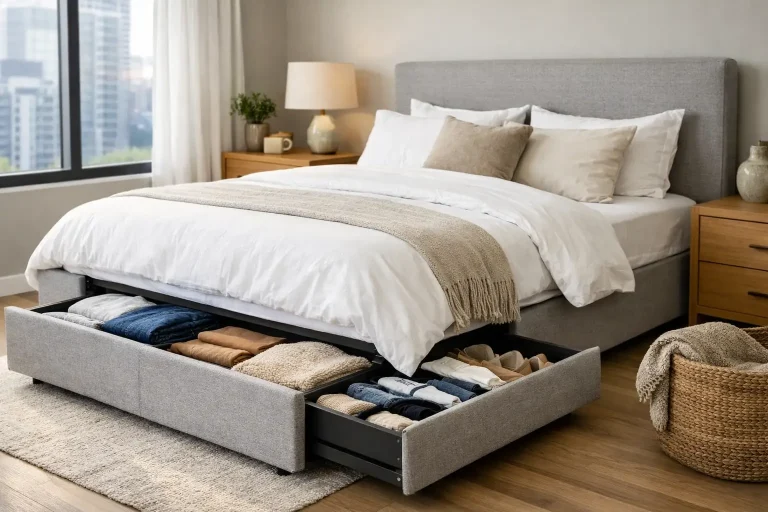
For first apartments, it often makes sense to choose a bed frame that works harder. A storage bed or drawer bed gives you room for extra bedding, seasonal clothes, or luggage without asking for another piece of furniture. In a compact apartment, that can free up enough floor space to make the room feel larger and easier to move around in.
If the bedroom is especially small, a platform bed can keep the look cleaner and lower-profile. If you regularly host overnight guests, a pullout bed may be more useful than trying to fit a separate guest setup into limited square footage. There is no single right answer here. The best bedroom setup depends on whether your biggest challenge is sleep comfort, storage, or flexibility.
Furnish your living room around real use
A first apartment living room does not need a full furniture set. In many cases, that is the fastest way to overcrowd the room. Start with the anchor piece, which is usually the sofa, then build outward only if the layout supports it.
Think carefully about size. A sofa that looks modest in a showroom can dominate a smaller apartment. Measure your wall, but also measure your walkway. You want enough room to sit comfortably without forcing everyone to squeeze sideways to pass through the space.
If your living room needs to multitask, choose pieces that do the same. A sofa with cleaner lines tends to fit more layouts over time. A coffee table with storage can reduce clutter. In some apartments, a compact side table and soft rug make more sense than a bulky centerpiece table that eats up the room.
This is where many urban households benefit from furnishing for movement rather than symmetry. Matching furniture can look neat, but practical spacing matters more. Your home should feel easy to live in, not staged.
How to furnish first apartment rooms with the right scale
Scale is what separates a comfortable apartment from one that feels cramped even when it is technically furnished well. Oversized furniture in a small home creates visual and physical stress. Undersized furniture can make rooms feel unfinished and awkward.
A good rule is to leave breathing room around each major piece. Beds need clearance for drawers or walking space. Sofas need room for legs, not just enough wall length. Dining tables need enough space for chairs to pull out properly. Before buying, map your layout with tape on the floor. It sounds basic, but it prevents expensive mistakes.
Vertical space matters too. If floor space is limited, look at taller wardrobes, wall treatments that draw the eye upward, and window coverings that help the room feel cleaner and more polished. In smaller homes, visual calm is part of comfort.
Choose storage before clutter chooses you
Nothing makes a first apartment feel smaller faster than visible clutter. That is why built-in-looking storage solutions are often worth prioritizing over occasional furniture.
Bedrooms usually need the most help. A proper wardrobe, a bed with storage, and a practical bedside setup can eliminate the need for extra bins and mismatched organizers. In the living area, storage should be subtle. Hidden compartments, closed cabinets, or slim shelving often work better than open storage if you do not want everything on display.
There is a trade-off, though. Too much closed storage can make a room feel heavy if every piece is bulky. The balance is usually one or two hardworking storage items paired with lighter furniture around them.
Window coverings and walls change the feel fast
Many first apartments feel unfinished not because they lack furniture, but because the surfaces are bare. Curtains, blinds, and wall finishes can make a room feel intentional very quickly.
Window treatments do more than improve appearance. They help with privacy, light control, and heat management. Depending on the room, roller blinds, venetian blinds, combi blinds, or curtains can each make sense. Bedrooms often benefit from better light blocking, while living spaces may need a softer filter that still lets in daylight.
Wallpaper is another tool people underestimate. Used selectively, it can define a bedroom wall or dining nook without taking up any floor space. That makes it especially useful in apartments where every inch counts. The key is restraint. One feature wall can elevate a room. Too many patterns at once can make a smaller apartment feel busy.
Spend more where your body notices
Not every piece of furniture deserves the same budget. If you are trying to furnish affordably, put more money into the products your body uses for hours at a time. That usually means your mattress, your bed frame, and your main seating.
A cheaper side table is easier to live with than a mattress that leaves you tired. The same goes for a sofa that sags too quickly or dining chairs that look nice but feel uncomfortable after twenty minutes. Budget-conscious furnishing is not about buying the cheapest option. It is about knowing where comfort and durability matter most.
For many first-apartment shoppers, installment plans can make better-quality essentials more realistic. That can be especially helpful when you are setting up multiple rooms at once and trying to avoid compromising on sleep or storage.
Buy in phases, but plan the whole home
You do not need to purchase everything immediately, but you should still make a whole-home plan from the start. This prevents the common problem of buying one piece at a time with no clear direction, then realizing nothing works together.
Choose a basic style and color direction early. It does not need to be complicated. Warm wood or cooler finishes. Light fabric or darker upholstery. Soft neutral walls or one feature surface. Once you know the direction, each new purchase becomes easier.
It also helps to think in milestones. Week one may cover sleep and basic seating. Month one may add dining and storage. Later on, you can layer in decor, wall finishes, better window treatments, or upgraded entry features like a digital lock. A phased approach feels less stressful and usually leads to smarter decisions.
If you want expert guidance, this is where a one-stop furnishing partner can save time. Brands like Catnap Lair are built around real-home planning, which is useful when you are trying to balance comfort, space-saving furniture, and budget in one go rather than shopping every category separately.
Your first apartment does not need to be perfect to feel like home. It just needs to support your routines, fit your space, and give you comfort where it counts most. Start with the pieces that improve daily life, and the rest of the home will come together with much less guesswork.