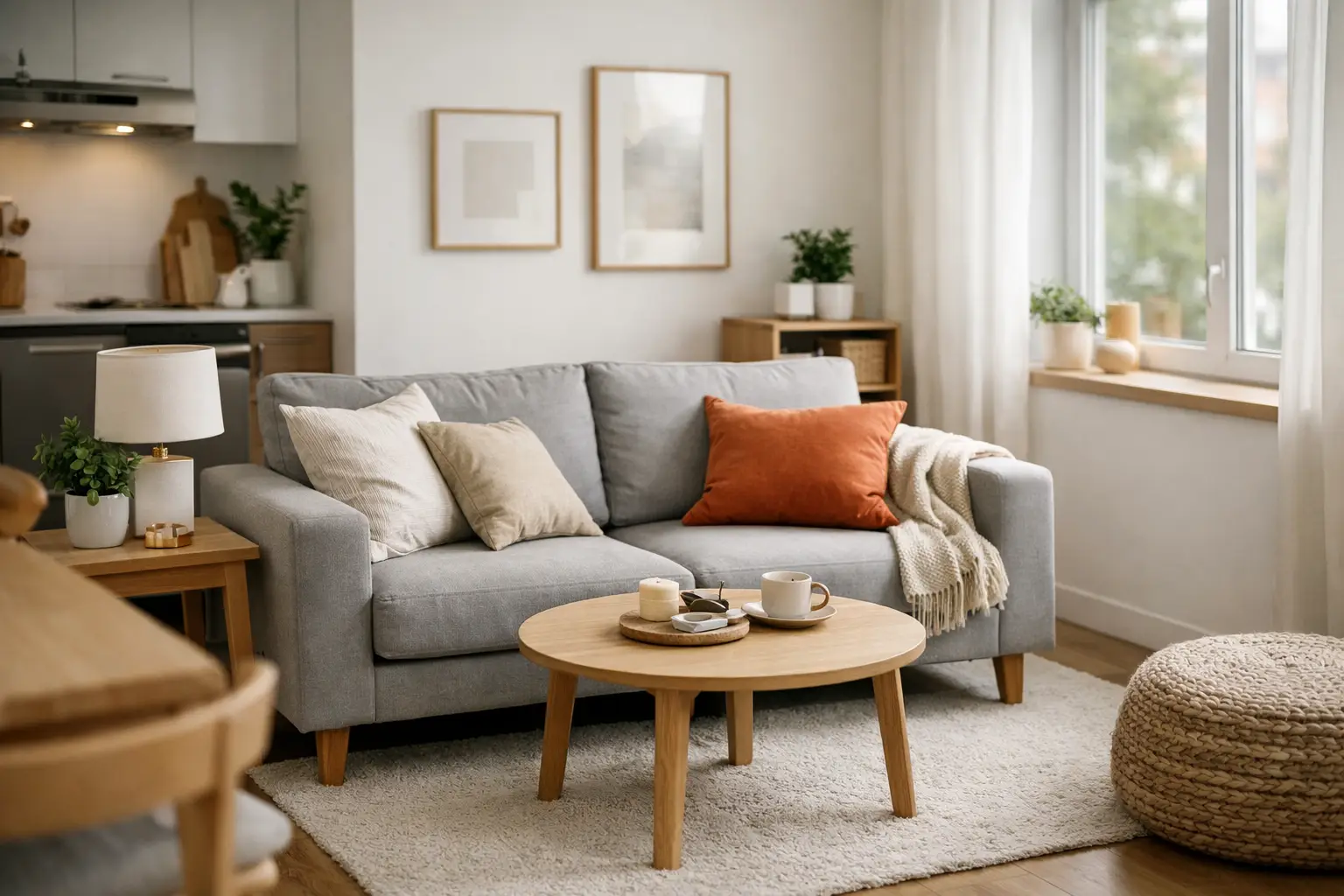
A sofa can make a compact living room feel settled, or make it feel like every path ends at an armrest. The best sofas for compact living are not simply the smallest models available. They are proportioned to leave room for daily movement, comfortable enough for real evenings at home, and practical for the way you host, lounge, work, and relax.
For apartments, smaller homes, and multipurpose rooms, the right choice is usually about smart dimensions rather than compromise. A well-chosen two- or three-seater can deliver more usable comfort than an oversized sectional that dominates the entire room.
Start With the Space Around the Sofa
Before looking at fabric colors or cushion styles, measure the area where the sofa will sit. Record the wall length, room width, door swings, window positions, and the path from the entryway to the seating area. A sofa that fits against the wall can still be the wrong purchase if it cannot clear a corner, elevator, hallway, or doorway during delivery.
Leave about 30 to 36 inches for major walkways whenever possible. If the sofa faces a TV console or coffee table, aim for roughly 16 to 18 inches between the coffee table and the seat edge. These clearances keep the room functional rather than merely furnished.
Painter’s tape is a simple planning tool. Mark the sofa’s footprint on the floor, then walk around it as you normally would. Open nearby doors, pull out dining chairs, and imagine carrying groceries through the room. This quick exercise often reveals that an extra six inches of depth matters more than expected.
Best Sofas for Compact Living: Shapes That Work
The best shape depends on your room, not just the number of seats you want. In a narrow living room, a streamlined straight sofa usually makes better use of the wall than a bulky L-shaped design. Choose a model with slim arms, a shallower profile, and visible legs to preserve visual openness.
Apartment-Size Two-Seat Sofas
A compact two-seater is a strong choice for couples, solo homeowners, or rooms that need space for a dining table or work area. Look for a width around 60 to 72 inches and a depth that supports comfortable sitting without reaching too far into the room. A good two-seater can feel generous when it has supportive seat cushions and armrests slim enough not to waste valuable width.
This is also the easier choice when your home layout may change. It can move from a living room to a study, guest room, or bedroom lounge area more easily than a large sectional.
Compact Three-Seat Sofas
A three-seater is often worth considering when the room is wide enough and the sofa will be your household’s main place to relax. The key is to avoid deep, overstuffed designs that consume floor space without adding meaningful seating. A tailored three-seater with a lower back, narrow arms, and raised legs can seat three people while keeping the room visually lighter.
Check the internal seat width, not only the overall sofa width. Large arms can make a sofa look substantial while reducing the actual space available to sit.
Reversible Chaise Sofas
A chaise sofa gives you a place to stretch out without needing a separate ottoman. For compact homes, a reversible chaise is particularly useful because you can place the extended section on either side as your layout changes. It suits a corner placement and can create a relaxed lounge zone without adding another piece of furniture.
There is a trade-off. The chaise section needs open floor space in front of it, so it may interrupt a walkway in a long, narrow room. Measure the chaise projection carefully before deciding.
Sofa Beds for Guest-Ready Homes
If the living room occasionally becomes a guest room, a sofa bed can be one of the hardest-working pieces in the home. It eliminates the need to dedicate an entire room to overnight visitors. Choose a model with a smooth opening mechanism and confirm the fully opened bed dimensions, not just the closed sofa dimensions.
Comfort varies widely. Some sofa beds are excellent for occasional guests, while others are suitable for more frequent use. If sleep comfort is a priority, test the mattress support and ask how much effort is required to open and close the frame.
Choose Depth for How You Actually Sit
Seat depth has a major effect on comfort in a compact room. Deep sofas can feel luxurious for stretching out, but they may force shorter users to sit forward without proper back support. They also take up more floor area than many homeowners expect.
For everyday upright sitting, watching TV, or chatting with guests, a seat depth of roughly 20 to 22 inches often feels balanced. A deeper seat may suit taller users or households that prefer a more relaxed, lounging posture. The right answer depends on who uses the sofa most, so comfort should never be decided from measurements alone.
Seat height matters too. A seat around 17 to 19 inches is generally easy to get in and out of for most adults. Low-profile sofas can look modern, but they may be less comfortable for older family members or anyone with knee concerns.
Details That Make a Small Room Feel Bigger
The visual weight of a sofa is just as important as its physical size. Raised legs show more floor beneath the frame, which helps a room feel less crowded. Sofas with clean lines and a defined base tend to look lighter than models with oversized rolled arms, thick skirts, or heavily padded backs.
Lighter neutral upholstery can reflect more light, but it is not the only smart option. A medium-toned gray, textured beige, muted green, or soft blue can add personality without overwhelming the room. In busy households, a heathered or woven fabric often hides everyday marks better than a flat, pale fabric.
If you love a bold color, keep the sofa silhouette simple. One strong visual feature is usually enough in a compact space. Add warmth through cushions, a throw, artwork, or curtains instead of choosing several large competing pieces.
Consider Storage and Flexible Pieces
A sofa with hidden storage can be useful for blankets, board games, or seasonal items, especially where closets are limited. Storage should be easy to access, however. If opening the compartment requires moving a heavy coffee table every time, it may not solve the problem you hoped it would.
An ottoman with storage can be even more flexible. It can serve as a footrest, extra seating, a soft coffee table with a tray on top, or a place to tuck away clutter before guests arrive. Nesting tables and slim side tables are also helpful because they provide surfaces when needed without permanently filling the room.
For homeowners furnishing several rooms at once, it helps to plan the sofa alongside the bed, dining set, window coverings, and storage pieces. Catnap Lair supports this practical, whole-home approach with furniture options designed around comfort, value, and real space constraints.
Fabric and Cushion Choices for Everyday Life
Compact living means the sofa often works harder. It may be the movie-night seat, the work-from-home break spot, the kids’ reading corner, and the guest perch all in one week. Pick upholstery that matches that reality.
Performance fabrics and tightly woven materials are sensible for homes with children, pets, or frequent visitors. Removable cushion covers can make maintenance easier, although not every removable cover is machine washable, so check care instructions first. Leather or leather-look upholstery is easy to wipe down, but it can feel warmer in hot weather and may show scratches over time.
For cushions, high-density foam generally provides a more supportive sit and holds its shape well. Feather-blend cushions can feel softer and more relaxed, but they often need regular fluffing. Neither is automatically better. Choose firmer support if the sofa is your primary daily seat, and choose a softer feel if lounging is the main goal.
Avoid These Common Small-Space Mistakes
The most common mistake is buying based on a showroom impression alone. Large retail spaces make almost every sofa look smaller than it will at home. Bring your room measurements, and compare the overall width, depth, height, and delivery access before committing.
Another mistake is filling every open corner. A compact room needs some breathing room to feel comfortable. One well-sized sofa, a useful table, and thoughtful lighting often create a better living area than a crowded arrangement of small chairs and side pieces.
Finally, do not overlook the back of the sofa. If it will float in the middle of an open-plan room, choose a design that looks finished from all sides. A low console behind it can create gentle separation between the living and dining areas, but only if it does not narrow the walkway.
Your sofa should support the life happening around it, not force the room to work around the sofa. Measure carefully, sit before you decide when possible, and choose the design that leaves enough space for the simple daily comfort of moving freely at home.