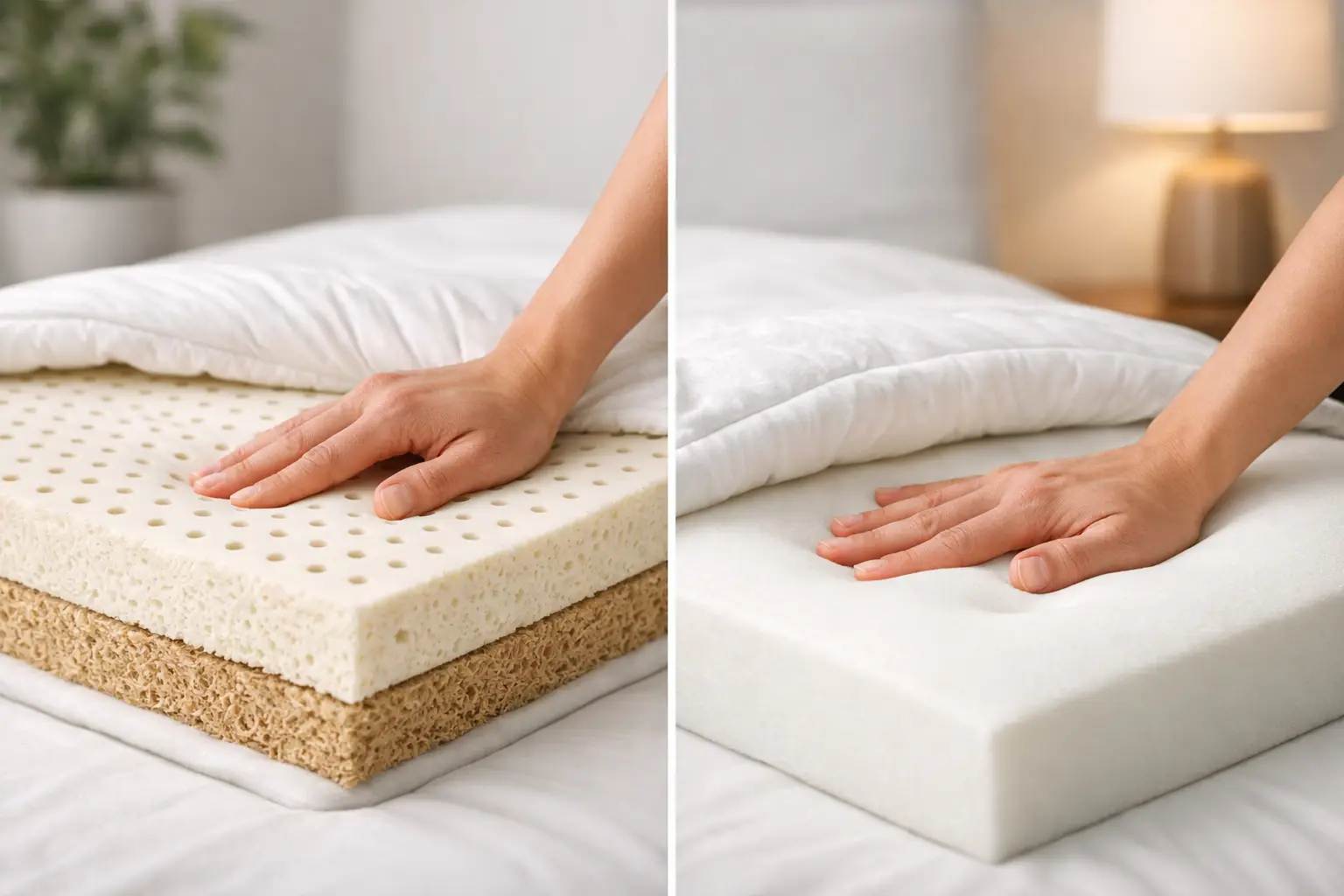
You can feel the difference between these two mattress types in the first 30 seconds. One gently hugs your body and slows your movement. The other feels springier, cooler, and a little more lifted. If you are comparing a latex vs memory foam mattress, the better choice is not about hype – it is about how you sleep, how warm you get at night, and what kind of support feels right to your body.
For many homeowners, this decision becomes harder because both materials are marketed as pressure-relieving, supportive, and premium. That is technically true, but they solve comfort in very different ways. If you are buying for a master bedroom, a guest room, or a new home setup, it helps to understand what living with each mattress actually feels like after weeks and years, not just a quick showroom test.
Latex vs memory foam mattress: the real difference
Memory foam is known for contouring. When you lie down, it responds to heat and pressure, then molds around your shoulders, hips, and lower back. That is why many people describe it as a cradling or hugging feel. It can be especially comfortable for side sleepers or anyone who wants stronger pressure relief around joints.
Latex feels different from the first moment. Instead of sinking in deeply, you rest more on the surface with a buoyant, responsive pushback. It still cushions pressure points, but it does not create that slow, enveloping sensation. If memory foam feels like being nestled in place, latex feels more like being supported with a light bounce.
Neither is automatically better. It depends on whether you prefer a mattress that conforms closely or one that keeps you lifted and easier to move on.
How each material handles support and pressure relief
Support is often misunderstood. A soft mattress can still be supportive if it keeps your spine aligned. A firmer mattress can still cause discomfort if it creates too much pressure at the shoulders or hips.
Memory foam usually performs well for pressure relief. It spreads weight more evenly and can reduce sharp pressure buildup, which is why many sleepers with shoulder pain or hip discomfort like it. Couples also tend to appreciate how well it absorbs movement. If your partner shifts, gets in late, or wakes up earlier, memory foam usually keeps that disturbance lower.
Latex provides support in a more active way. It compresses under heavier areas, but it also pushes back faster. For back and combination sleepers, this can feel more balanced because the mattress adapts without letting the body sink too deeply. Some people who find memory foam too soft or too restrictive end up preferring latex because it feels steadier and more natural when changing positions.
This is where body type matters. Heavier sleepers often feel that very soft memory foam allows too much sink over time, especially if the comfort layers are thick. Latex often feels more stable in those cases. Lighter sleepers, on the other hand, may enjoy the deeper contouring of memory foam more, because they can still get pressure relief without feeling stuck.
Which sleeps cooler?
If you tend to wake up warm, this part matters a lot. Traditional memory foam has a reputation for trapping heat because it hugs the body and reduces airflow around you. Many newer models use cooling gels, open-cell designs, or breathable covers to improve temperature control, and some do a good job. Still, memory foam generally sleeps warmer than latex.
Latex usually has the advantage for cooling. Its structure is more breathable, and because you sleep more on top of the mattress rather than deeply in it, heat tends to build up less. In warm climates or bedrooms without aggressive air conditioning, many sleepers find latex more comfortable across the night.
That said, cooling is not just about the foam itself. Your mattress cover, protector, sheets, bed frame, and even room ventilation all affect sleep temperature. A breathable latex mattress paired with heat-trapping bedding can still feel warmer than expected. Likewise, a well-designed memory foam mattress with strong airflow features may sleep cooler than older foam beds.
Motion isolation, bounce, and ease of movement
This category often decides whether a mattress feels peaceful or frustrating in daily use. Memory foam is excellent at isolating motion. That is one of its biggest strengths. If one partner tosses and turns, the other is less likely to feel every movement.
The trade-off is response speed. Because memory foam recovers more slowly, some people feel slightly stuck when turning or getting up. That may be a minor issue for younger sleepers, but it can matter more for older adults, restless sleepers, or anyone who changes positions often through the night.
Latex has more bounce and faster recovery. It is easier to roll, reposition, or get out of bed without that sunken feeling. For combination sleepers, that usually feels more effortless. The trade-off is that it may transfer a little more motion than memory foam, though many modern latex constructions still do well for couples.
Durability and long-term value
A mattress is not a small purchase, so lifespan matters. In general, latex is often considered one of the more durable mattress materials. High-quality latex tends to hold its shape well and resist deep body impressions longer than many lower-density foams. That can make it a strong long-term value, even when the upfront price is higher.
Memory foam durability varies more. A well-made memory foam mattress can still last for years and offer very good comfort, but lower-quality foam tends to soften faster. This is one reason why two memory foam mattresses can feel very different after a few years, even if they seemed similar at first.
For budget-conscious buyers, the question is not just which mattress costs less today. It is whether the comfort and support still hold up over time. Sometimes paying a little more for better construction saves money in the long run.
Latex vs memory foam mattress for different sleepers
Side sleepers often lean toward memory foam because of its close contouring around the shoulders and hips. If you sleep mainly on your side and want stronger pressure relief, memory foam can be a very comfortable match.
Back sleepers can go either way. If you like a gently cradled feel, memory foam may work well. If you prefer a mattress that keeps your hips from sinking too much and feels easier to move on, latex often stands out.
Stomach sleepers usually need enough support to keep the midsection from dipping. Latex often performs better here because of its buoyant support, though a firmer memory foam model can also work.
Combination sleepers usually prefer latex or a responsive hybrid feel because changing positions is easier. Hot sleepers often prefer latex for the same reason. Couples who care most about motion isolation may still choose memory foam.
What about smell, maintenance, and everyday comfort?
Some new mattresses have an initial odor after unboxing. Memory foam is more likely to have noticeable off-gassing at the start, though this usually fades. Latex can also have a natural scent, but many people find it milder or different from synthetic foam smell.
In daily use, comfort comes down to more than firmness labels. A medium memory foam mattress and a medium latex mattress can feel completely different because the response curve is different. That is why honest guidance matters. The label alone does not tell you whether the mattress feels hugged, lifted, cool, or quick to respond.
If you are furnishing a home and trying to balance comfort with practical value, it helps to think beyond material names. Consider who is sleeping on the bed, whether the room runs warm, how sensitive you are to motion, and whether you want a mattress that feels plush and contouring or buoyant and supportive. At Catnap Lair, this is exactly the kind of mattress conversation that saves people from buying based on marketing alone.
So which one should you choose?
Choose memory foam if you want deeper contouring, excellent motion isolation, and pressure relief that softly hugs the body. It is often a strong fit for side sleepers and couples, especially if you do not mind a slower response feel.
Choose latex if you want a cooler, springier surface with easier movement and strong long-term resilience. It is often a better fit for hot sleepers, combination sleepers, and anyone who dislikes the feeling of sinking in too much.
The best mattress is the one that fits your sleep habits, not the one with the louder sales pitch. If you focus on how you actually sleep each night, the right choice becomes much clearer.