A mattress that feels too firm at 10 p.m. can feel like a much bigger problem at 3 a.m. If you’re wondering how to choose mattress topper options without wasting money on the wrong one, the key is to start with what your mattress is doing now, not what the packaging promises.
A topper is not a magic fix for every sleep issue. But when you choose the right one, it can soften pressure points, add a bit of support, improve temperature comfort, and help you get more life from a mattress that is still structurally sound. The trick is knowing what problem you’re actually trying to solve.
How to choose mattress topper based on your sleep problem
Most shoppers begin by looking at material first. In practice, that is usually the wrong first step. A better approach is to ask one simple question: what feels off when you lie down?
If your mattress feels too firm, you likely need more pressure relief. Side sleepers often notice this first in the shoulders and hips. In that case, a softer topper in memory foam or plush latex can help cushion the body.
If your mattress feels slightly too soft, a topper may help only to a point. A firmer latex or high-density foam topper can create a more stable surface feel, but it will not fully repair a mattress that is sagging deeply. That distinction matters. If the mattress underneath has already lost proper support, adding a topper may just delay the replacement decision.
If your issue is heat, focus less on softness and more on breathable materials and cover design. Some sleepers love the body-hugging feel of memory foam but dislike how warm it can get. Others sleep better on latex because it feels a bit more buoyant and airy.
If motion transfer is the problem, especially for couples, memory foam tends to absorb movement better than springier materials. If easy movement matters more, latex and thinner foam toppers usually feel less “stuck in place.”
Start with your current mattress condition
The best topper in the world cannot rescue a mattress that is already collapsing. Before buying anything, check whether your mattress is too old, visibly sagging, or uneven in the middle. If you can see body impressions or feel your spine dipping, a topper is unlikely to solve the root issue.
A topper works best when the mattress is still supportive but not quite comfortable enough. Think of it as fine-tuning rather than rebuilding. That is why many homeowners use toppers on guest beds, newer mattresses that feel a little too firm, or main beds that need a comfort adjustment without a full replacement yet.
For practical households trying to manage budget carefully, this is where a topper makes sense. It is a lower-cost comfort upgrade when the mattress foundation is still doing its job.
Pick the right topper material
Material changes the feel more than most people expect. Two toppers can have the same thickness and still sleep very differently.
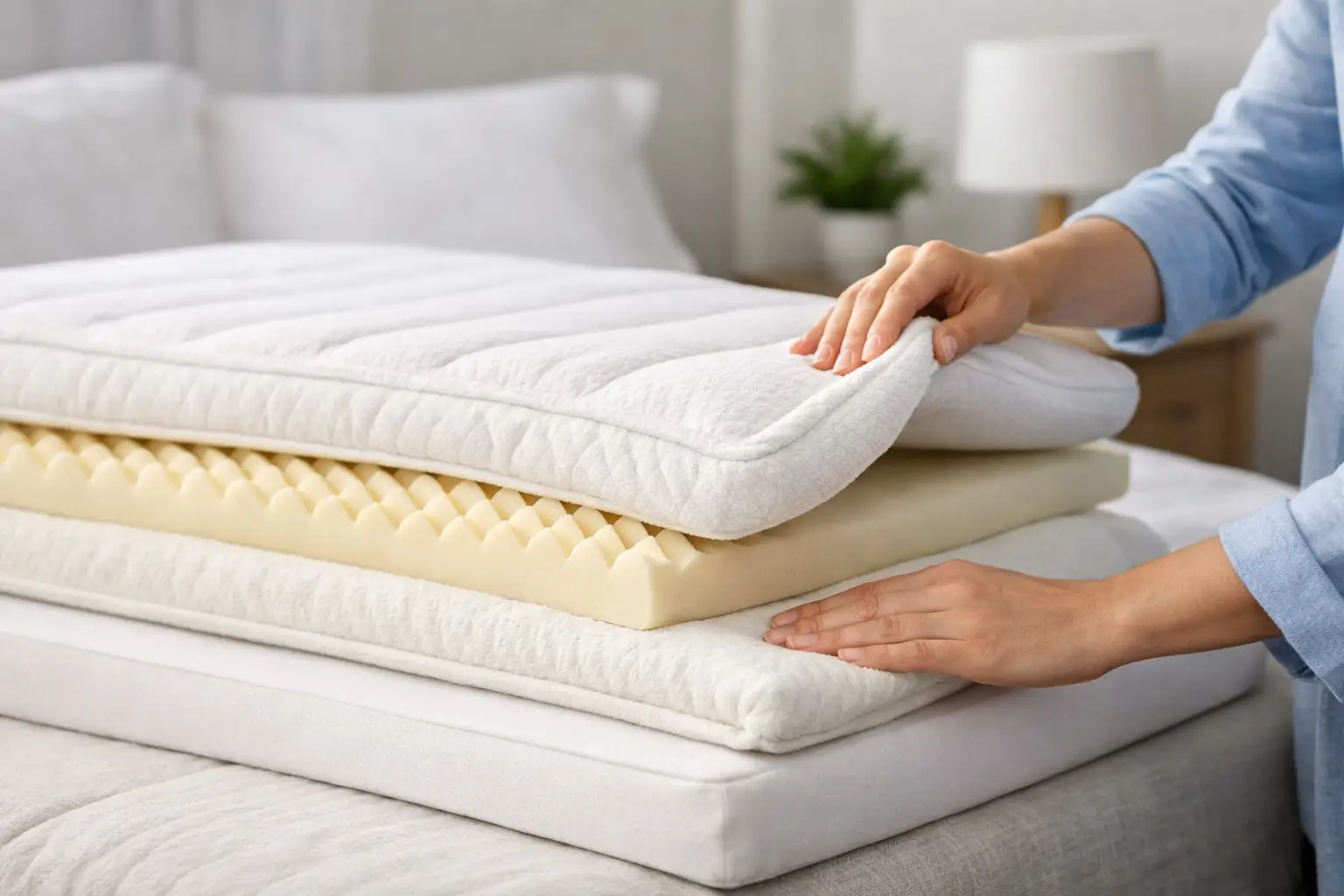
Memory foam
Memory foam is a strong choice if you want deeper contouring and better pressure relief. It molds around the body, which many side sleepers find comfortable. It also reduces partner disturbance well.
The trade-off is heat and slower response. Some memory foam toppers feel warmer, and some people dislike the sinking sensation. If you change positions often, you may prefer something more responsive.
Latex
Latex feels more springy and supportive than memory foam. It cushions the body without the same deep hug, and it often sleeps cooler. That makes it a popular middle-ground option for combination sleepers and anyone who wants comfort without too much sink.
The trade-off is price. Latex toppers often cost more, but many sleepers feel the durability and breathable feel justify it.
Fiberfill or down-alternative
These toppers add surface plushness rather than real support. They can make a bed feel softer and cozier, but they usually compress faster and do not change alignment as much as foam or latex.
They are best if your mattress is already supportive and you only want a softer hand feel on top.
Gel-infused foam
Gel-infused foam is common in cooling-focused toppers. It can help with heat management, but results vary. It is better to think of gel as a small comfort feature, not a guarantee that the topper will sleep cold.
Thickness matters more than many buyers realize
When people ask how to choose mattress topper models, thickness is often where the decision gets much easier.
A 1-inch topper gives a subtle adjustment. It works if your mattress is mostly fine and you just want to smooth out a firmer surface.
A 2-inch topper is often the most balanced option. It can noticeably improve comfort without dramatically changing how the bed feels. For many sleepers, this is the safest place to start.
A 3-inch topper creates a more obvious difference. It can be great for pressure relief, especially for side sleepers or lighter mattresses that feel hard. But too much softness can throw off alignment for stomach sleepers or heavier sleepers if the material is too plush.
Thicker is not always better. If your mattress already has some give, adding a very thick soft topper can make the sleep surface feel unstable.
Match firmness to your sleep position
Sleep position is one of the most reliable shortcuts when narrowing down topper choices.
Side sleepers
Side sleepers usually do best with a softer topper that relieves pressure at the shoulders and hips. Memory foam or softer latex in a 2-inch to 3-inch profile is often a good fit.
Back sleepers
Back sleepers usually need a more balanced feel. Too soft and the hips may sink; too firm and the lower back may not feel cushioned enough. Medium or medium-firm toppers are usually the safest choice.
Stomach sleepers
Stomach sleepers generally need caution with toppers. A topper that is too soft can overextend the lower back. A thinner, firmer topper is usually better if you simply want a small comfort upgrade.
Combination sleepers
If you switch positions throughout the night, look for responsive materials like latex or a medium-feel foam topper. These are usually easier to move on than very plush memory foam.
Consider your body weight and bed size
Body weight changes how a topper feels. A softer topper may feel comfortable to a lighter sleeper but too thin or unsupportive to someone heavier. Heavier sleepers often do better with denser materials and slightly firmer constructions because they compress the topper more deeply.
Bed size matters too, especially for couples. On a queen or king bed, motion isolation may matter more than on a twin. If one partner sleeps hot and the other wants deeper cushioning, you may need to decide which priority matters most, because no topper is perfect at everything.
Cooling claims need a little skepticism
Many toppers advertise cooling features, but not all cooling is equal. Breathable covers, open-cell foam, and latex often help more than marketing buzzwords alone. If you naturally sleep hot, your sheets, mattress protector, room temperature, and mattress underneath all affect the result.
That means a cooling topper can help, but it may not completely fix a warm sleep setup. It is better to see it as one part of the solution.
Practical buying mistakes to avoid
One common mistake is buying a topper to fix a mattress that should really be replaced. Another is choosing based only on softness. Comfort matters, but so does alignment. A bed that feels plush for ten minutes can feel uncomfortable by morning if your back is not supported.
Another mistake is ignoring the cover and fit. A topper that slides around or bunches under the sheet becomes annoying fast. Corner straps or a secure fitted design can make everyday use much better.
Price also deserves a realistic view. The cheapest topper may flatten quickly, while the most expensive one may offer features you do not actually need. Good value usually comes from matching the product to your problem instead of buying by hype.
How to choose mattress topper if you’re furnishing on a budget
For many households, especially when setting up a new home, a topper can be a smart stopgap or a long-term comfort upgrade. If your mattress is supportive but not quite right, a topper can stretch your budget further while improving nightly comfort.
That is often more practical than rushing into a full mattress replacement before you are ready. Brands that focus on real-home sleep needs, like Catnap Lair, usually see this firsthand: most buyers do not need the fanciest option, they need the right level of support, comfort, and value for how they actually sleep.
The best choice usually comes down to this. If your mattress is still in good shape, choose a topper based on the problem you feel most clearly – pressure, heat, motion, or lack of cushioning. Once you know that, the right material, thickness, and firmness become much easier to spot. A good night’s sleep is rarely about buying more. It is about buying smarter.