A BTO storage bed makeover can solve one of the most frustrating parts of furnishing a new home: finding a place for bulky belongings without turning the bedroom into a crowded storeroom. Done well, the bed becomes the quiet workhorse of the room, holding luggage, spare linens, festive decor, and less-used items while still giving you a comfortable, welcoming place to rest.
The key is not simply choosing a bed with storage. It is planning the entire sleep zone around how you live. From the opening direction to the mattress height and bedside clearance, small decisions make a big difference in a compact bedroom.
Start Your BTO Storage Bed Makeover With a Real Storage Plan
Before choosing colors, headboards, or bedroom wallpaper, decide what will actually live beneath the bed. This keeps you from paying for storage that looks useful but does not match your household needs.
For many new homeowners, under-bed storage is best reserved for clean, dry, occasional-use items. Think extra bedding, travel bags, winter clothing for holidays, keepsakes, and seasonal decorations. Items you reach for weekly, such as workout gear or children’s school supplies, may be better placed in a wardrobe or cabinet where access is easier.
Measure your room with the bed in its intended position. A storage bed can have a substantial footprint, especially when it includes a thick upholstered frame or a tall headboard. Leave enough walking space around the open sides of the bed and enough room for wardrobe doors to swing comfortably. A beautiful bed is not a practical choice if getting dressed requires squeezing sideways every morning.
It also helps to consider who will use the room. A couple may prefer a king bed for comfort, but a queen may create a better balance in a smaller master bedroom by preserving circulation space. In a common bedroom, a storage bed with a slimmer frame can free up valuable floor area for a desk, dresser, or play space.
Choose the Storage Mechanism That Fits Your Routine
Not all storage beds work the same way. The right design depends on the room layout, the items you need to store, and how often you need access.
Lift-up storage beds for maximum capacity
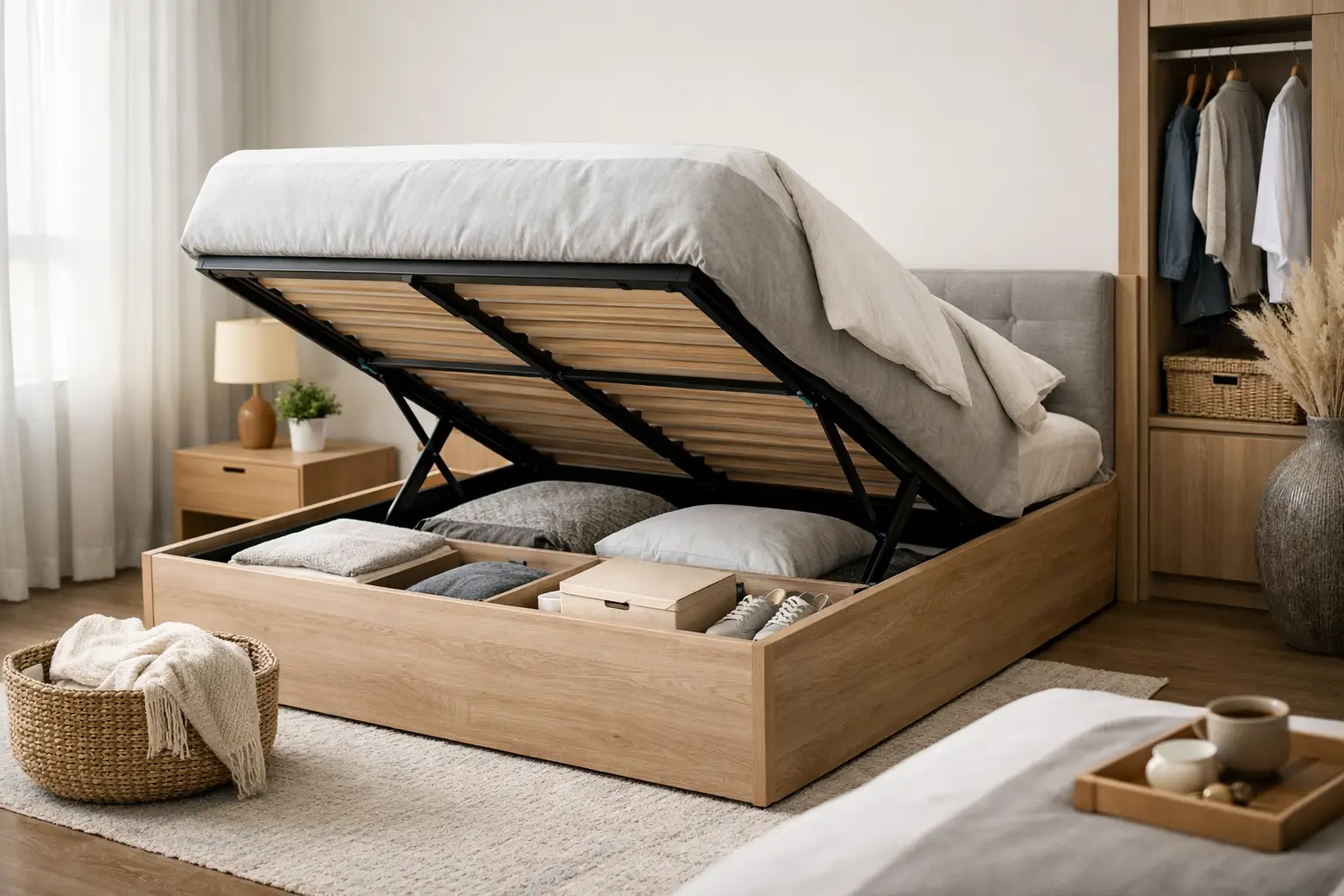
A lift-up storage bed uses a hydraulic mechanism to raise the mattress platform, revealing a large enclosed compartment underneath. This design gives you the greatest usable volume and is particularly suitable for bedrooms with limited wall space for extra cabinets.
It is a strong option for households that need to store larger, less frequently used items. Because the entire mattress platform lifts, you do not need side clearance for drawers. That can be helpful when one side of the bed sits close to a wall.
There is a trade-off. Opening the compartment requires lifting the mattress platform, so it is less convenient for small items you use every day. Choose a reliable mechanism and ask how it performs with the size and weight of your preferred mattress. A proper fitting mattress matters for both safety and ease of use.
Drawer beds for easy, frequent access
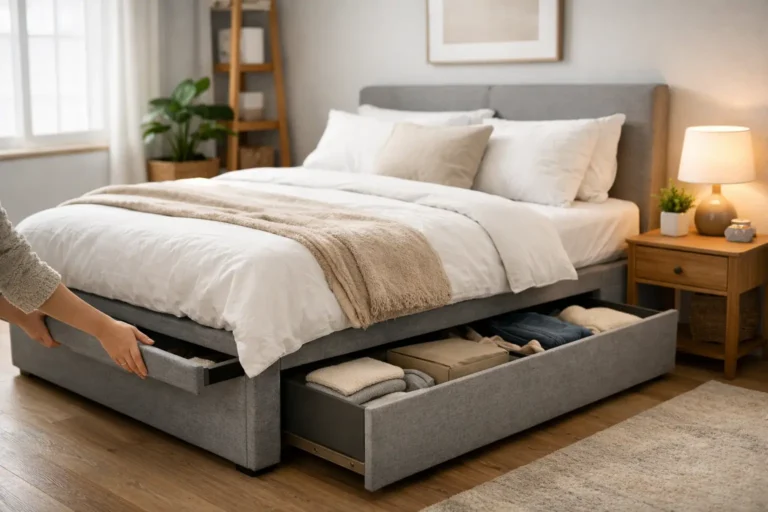
Drawer beds are ideal when you want to retrieve items quickly without lifting the mattress. They can make daily routines easier, especially for linen, light clothing, or children’s belongings.
However, drawers need room to extend. If the bed is placed close to a wall, wardrobe, or study table, the drawers may become difficult to use. Measure the fully opened drawer depth, not just the bed frame itself. In a narrow room, a lift-up design is often more space-efficient than a drawer bed.
Platform storage beds for a cleaner visual line
Some platform beds incorporate hidden storage while keeping a lower, more streamlined profile. These can suit homeowners who like a minimalist bedroom with less visual bulk. They may not offer the same capacity as a deep lift-up compartment, but the lighter look can make a compact room feel more open.
The best choice is not automatically the one with the biggest storage volume. It is the one you can access easily and live with comfortably for years.
Build the Room Around the Bed, Not Against It
Once your storage bed is selected, treat it as the anchor of the room. The surrounding furniture should support its function rather than compete with it.
Start with the headboard wall. An upholstered headboard can soften a room with tile or vinyl flooring and make late-night reading more comfortable. For a calmer, hotel-inspired effect, choose a neutral fabric in beige, gray, taupe, or soft cream. If your bedroom already has patterned curtains or textured wallpaper, a simple bed frame prevents the space from feeling overly busy.
Bedside tables should be proportional to the frame. In tighter bedrooms, consider compact tables with one drawer instead of bulky cabinets. Wall-mounted lights or slim bedside lamps can reduce clutter on the tabletop. You want enough surface area for essentials, not a landing zone for unopened parcels and charging cables.
For rooms with a wardrobe directly opposite the bed, check the clearance before ordering. Sliding wardrobe doors can be useful where swing doors would meet the bed frame. If the bedroom layout is unusually tight, a professional measurement consultation can prevent an expensive mistake.
Make the Mattress Part of the Makeover
A storage bed makeover should never focus so much on organization that sleep quality becomes an afterthought. Your mattress affects how high the finished bed sits, how easy the storage mechanism is to operate, and, most importantly, how rested you feel each morning.
A thicker mattress can create a more luxurious look, especially against a tall headboard, but it may make the bed feel too high for shorter users or children. It can also add weight to a lift-up platform. On the other hand, a mattress that is too thin may leave the bed looking underdressed and offer less cushioning than you need.
Choose based on your sleep habits first. Side sleepers often appreciate pressure relief around the shoulders and hips, while back sleepers may prefer balanced support that keeps the spine aligned. Couples should also consider motion isolation, edge support, and temperature regulation. There is no single firmness level that suits every household.
At Catnap Lair, homeowners can compare mattresses and storage bed styles together, which makes it easier to judge the final height, comfort, and fit rather than making two separate decisions. This is especially helpful when furnishing a new home on a set budget or installment plan.
Use Color and Texture to Make Storage Feel Invisible
The smartest storage bed is one that does not make the bedroom feel like storage. Visual balance matters.
If your bed frame is large or has a deep storage base, use lighter colors around it. Warm white walls, pale wood furniture, and soft neutral bedding can reduce visual heaviness. A large rug that extends beyond both sides of the bed also helps define the sleep area and makes the room feel more finished.
Texture adds character without taking up space. Consider linen-look bedding, a quilted bedspread, upholstered cushions, or textured wallpaper behind the headboard. If you prefer a more modern look, pair a clean-lined platform bed with roller blinds or combi blinds in a muted tone. The goal is to create layers without filling every corner.
Avoid placing too many storage bins around the bed just because the room is small. When every surface is used for storage, the room can start to feel stressful. Let the concealed compartment do its job, and keep visible furniture intentional.
Organize the Inside So It Stays Useful
A lift-up compartment can become a black hole if everything is placed inside loosely. Divide the storage area into zones before loading it. Keep bedding together, place travel items in one area, and use labeled fabric bags or low-sided containers for smaller belongings.
Do not overfill the compartment. Leave enough room to lift items out without dragging them across the base, and avoid storing damp goods, leaking toiletries, or anything with strong odors. If the room tends to feel humid, use breathable storage bags and air out the compartment when changing your sheets.
A simple rule works well: if you have not used an item for several years and would not notice its absence, it may not deserve prime storage space. Your bed should support a calmer home, not hide clutter you no longer need.
Finish With Comfort, Not More Furniture
The final layer of a BTO storage bed makeover is comfort. Add bedding that feels good against the skin, a supportive mattress that suits your sleep position, and window coverings that help create a darker, more private room. Keep a clear path from the door to the bed, and make sure the room still has space to breathe.
A well-planned storage bed gives you more than extra room for belongings. It gives your bedroom a chance to feel restful from the moment you walk in, even when every square foot needs to work harder.