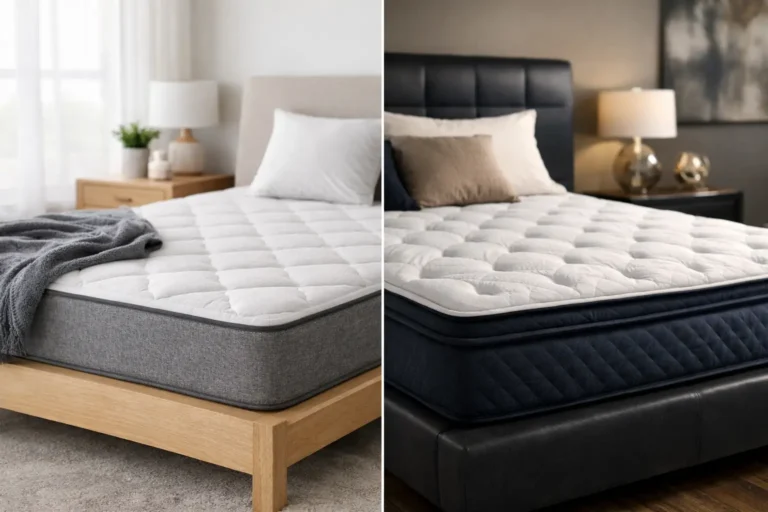
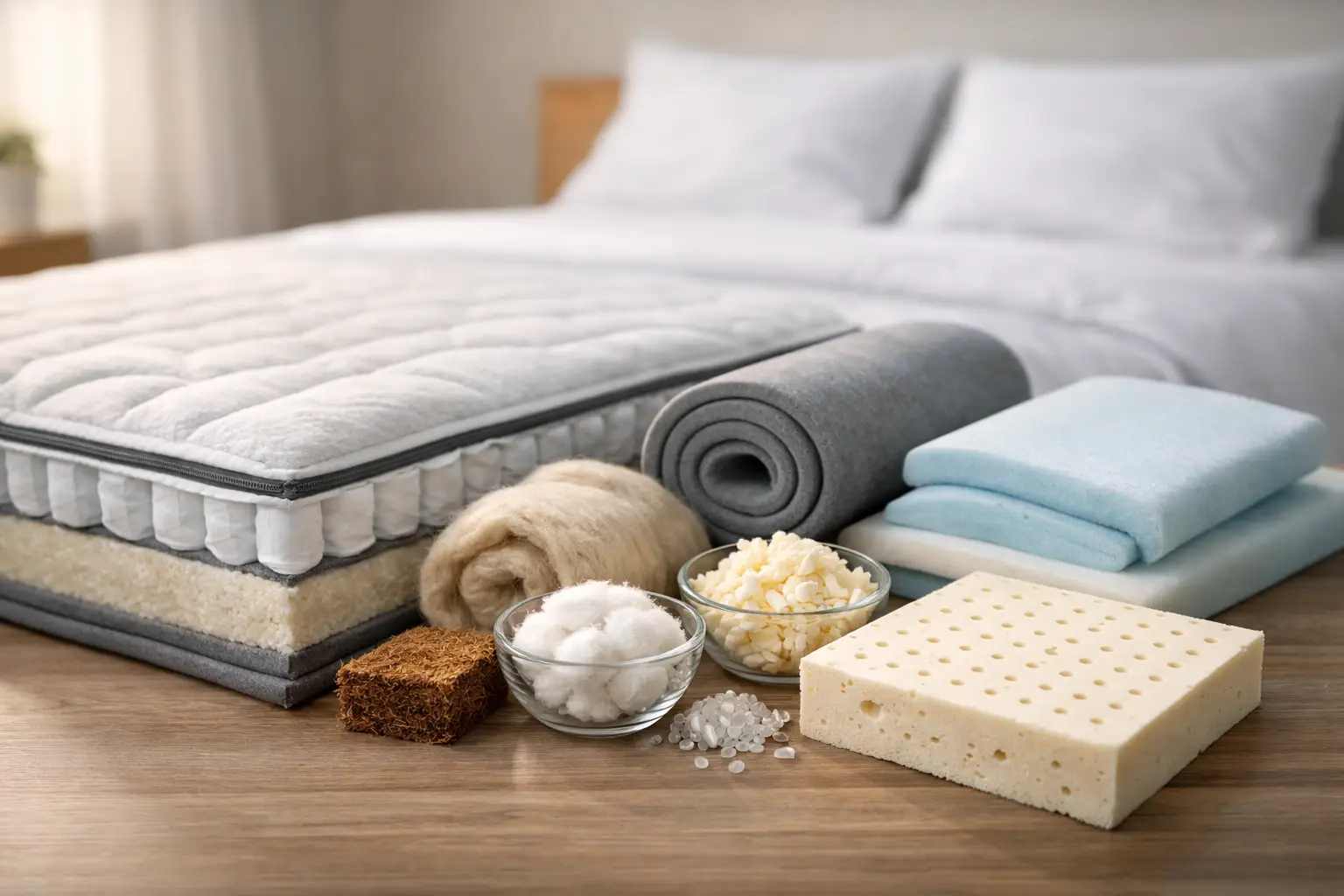
A mattress can look plush in a showroom, feel comfortable for five minutes, and still be the wrong fit after a month of sleep. The difference often comes down to what is inside it. This mattress materials explained guide breaks down the layers that affect pressure relief, temperature, motion transfer, edge support, and long-term value.
For couples setting up a first home, the goal is not to buy the most expensive mattress or chase a single firmness label. It is to choose materials that suit how you sleep, your body type, your room temperature, and the kind of support you genuinely enjoy night after night.
Mattress Materials Explained: Start With the Layers
Most mattresses contain more than one material. Even a simple-looking bed may have a comfort layer near the surface, a transition layer to prevent you from sinking too deeply, and a support core underneath. The top layers largely determine immediate comfort. The core has the biggest effect on stability, durability, and how the mattress holds your body over time.
This is why two medium-firm mattresses can feel completely different. A medium-firm memory foam bed may feel close-hugging and pressure-relieving, while a medium-firm pocket spring mattress may feel more buoyant and easier to move around on. Material matters as much as the firmness rating.
Memory Foam: Pressure Relief With a Close Feel
Memory foam responds to body heat and pressure, gradually molding around your shoulders, hips, and back. It is a strong choice for side sleepers, people who wake with pressure points, and couples who do not want to feel every turn or late-night bathroom trip from the other side of the bed.
The trade-off is feel and temperature. Traditional memory foam has a slower response, so some sleepers feel as if they are sleeping in the mattress rather than on it. It can also retain warmth, especially in a room that already runs hot. Gel-infused, open-cell, or ventilated foams can improve airflow, but they do not turn a deep memory foam bed into a springy, cool-sleeping mattress.
Look beyond the word foam on a label. Higher-quality comfort foam should recover its shape well and resist developing body impressions too quickly. A mattress that feels very soft at first is not always the best option for long-term support.
Latex: Responsive, Breathable, and Naturally Buoyant
Latex has a distinctly different feel from memory foam. It cushions pressure points but springs back quickly, creating a more lifted and responsive surface. Many combination sleepers appreciate that they can turn, change positions, and get out of bed without feeling stuck.
Natural latex is often valued for breathability and durability. Its open structure can allow more air movement than dense foam, making it appealing for people who sleep warm. Latex can also be a smart choice for sleepers who want contouring without the slow sink of memory foam.
The main consideration is preference and price. Latex mattresses can feel firmer and more elastic than expected, even when marketed as medium. They are also often heavier and may cost more upfront. For buyers who prioritize durability and a responsive feel, that investment can make sense. For someone who loves the deep hug of memory foam, latex may feel too lively.
Polyfoam: Common, Useful, and Worth Comparing Carefully
Polyfoam, or polyurethane foam, is widely used in mattress comfort layers, transition layers, and support cores. It can range from basic cushioning foam to higher-density support foam, so its presence alone does not tell you whether a mattress is good or bad.
In a well-designed mattress, polyfoam can provide balanced cushioning at a more accessible price. It is common in foam and hybrid mattresses because it helps create different comfort levels without adding unnecessary cost. Lower-density foam, however, may soften and compress sooner under regular use, particularly for heavier sleepers or couples sharing one bed.
Ask about the role of the foam rather than focusing only on a marketing term. Is it a thin quilted layer for initial softness, a pressure-relieving comfort layer, or the main support core? That answer gives a clearer picture of how the mattress is likely to perform.
Pocket Springs: Targeted Support and Better Airflow
Pocket springs are individual coils wrapped in fabric pockets. Because each coil can move more independently, they usually provide better contouring and less motion transfer than older connected-spring designs. They also create natural air channels, which can help sleepers who prefer a cooler mattress surface.
A pocket spring mattress often feels easier to move on than all-foam options. It can be especially suitable for back sleepers, combination sleepers, and people who want stronger edge support when sitting or sleeping near the side of the bed.
More coils are not automatically better. Coil count matters, but so do coil gauge, zoning, overall mattress construction, and the quality of the comfort layers above the springs. A mattress with thoughtful zoning may offer firmer support through the lumbar area and gentler cushioning at the shoulders, which can help keep the spine more neutral.
Bonnell and Continuous Coils: Traditional Spring Support
Bonnell springs and continuous coil systems use interconnected coils. They are typically found in more budget-conscious mattresses and can offer a firmer, familiar spring feel. For a guest room, occasional use, or a buyer who prefers a straightforward supportive surface, they can be practical options.
Their compromise is movement. When coils are connected, pressure and motion can travel farther across the bed. If one partner is a light sleeper, pocket springs or foam layers generally provide better motion isolation. Connected springs may also contour less precisely around the body than pocket springs.
Hybrid Mattresses Combine Materials, Not Benefits by Default
A hybrid mattress usually combines a pocket spring support core with foam, latex, or both in the upper layers. This design is popular because it can balance pressure relief with airflow, responsive movement, and reliable support.
Still, hybrid is a construction category, not a guarantee of quality. One hybrid may use a thick memory foam layer for a soft, body-hugging feel. Another may use latex over springs for a cooler, bouncier surface. Two hybrids with the same firmness label can therefore suit very different sleepers.
When comparing a Dozi Mattress, Lady Americana Mattress, Maxcoil Mattress, Sleepy Night Mattress, or Fourstar Mattress, focus on the complete build: the comfort material, spring system, intended firmness, and whether the mattress supports your preferred sleeping position. A patient comparison is more useful than choosing based on a brand name or a single feature such as cooling gel.
Choose Materials Around How You Actually Sleep
Side sleepers usually need enough cushioning at the shoulder and hip to avoid pressure buildup. Memory foam, latex, and hybrids with a substantial comfort layer can work well, provided the support underneath keeps the waist from dipping.
Back sleepers often do best with an even balance of cushioning and support. Pocket springs, medium-firm hybrids, and supportive foam mattresses are common fits. The key is maintaining the natural curve of the lower back without creating a hammock effect.
Stomach sleepers generally need a flatter, firmer surface to limit excessive hip sink. A firm pocket spring mattress or a firmer hybrid is often easier to manage than a very plush all-foam model. If you are a combination sleeper, responsiveness matters. Latex and pocket spring hybrids tend to make position changes feel easier.
Body weight also affects feel. A lightweight sleeper may find a medium mattress firm because they do not compress the upper layers as much. A heavier sleeper may need denser foam, stronger springs, or a firmer build to prevent premature sagging and maintain support.
Cooling Materials Need Realistic Expectations
Cooling claims can be helpful, but they deserve a practical reading. Breathable covers, perforated latex, open-cell foam, and pocket spring airflow can all reduce heat buildup. They work best as part of the full mattress design, not as a thin top layer added for marketing.
If you naturally sleep hot, choose a mattress that does not allow deep, prolonged sink. Pocket springs and responsive latex are often strong starting points. Bedding, room ventilation, a mattress protector, and even the bed frame also affect how warm your sleep environment feels. A solid platform bed can work beautifully, but make sure the mattress receives the ventilation recommended for its design.
Do Not Forget Edge Support, Motion, and Bed Size
These details become very noticeable in a shared bedroom. Strong edge support gives you more usable sleeping space and makes getting dressed or sitting on the side of the bed feel steadier. Reinforced springs or firmer perimeter foam can help, though a very soft comfort layer may still feel less stable at the edge.
For couples, motion isolation may be just as valuable as firmness. Memory foam generally reduces movement best, while pocket springs can also perform well when paired with quality comfort layers. If one person sleeps warm and the other is easily disturbed, a medium hybrid often provides a sensible middle ground.
Before ordering, measure the room, the walkway, and the bed frame. In compact homes, a storage bed or drawer bed can free up valuable space, but the mattress still needs to match the frame’s support system. An overly thick mattress can also make a low platform bed feel awkwardly tall.
The best mattress material is the one that supports your body without making bedtime feel like a compromise. Take time to lie in your usual sleep position, notice how easily you move, and pay attention to whether your lower back, shoulders, and hips feel supported. That quiet, comfortable feeling is usually a better guide than the most impressive label on the tag.