
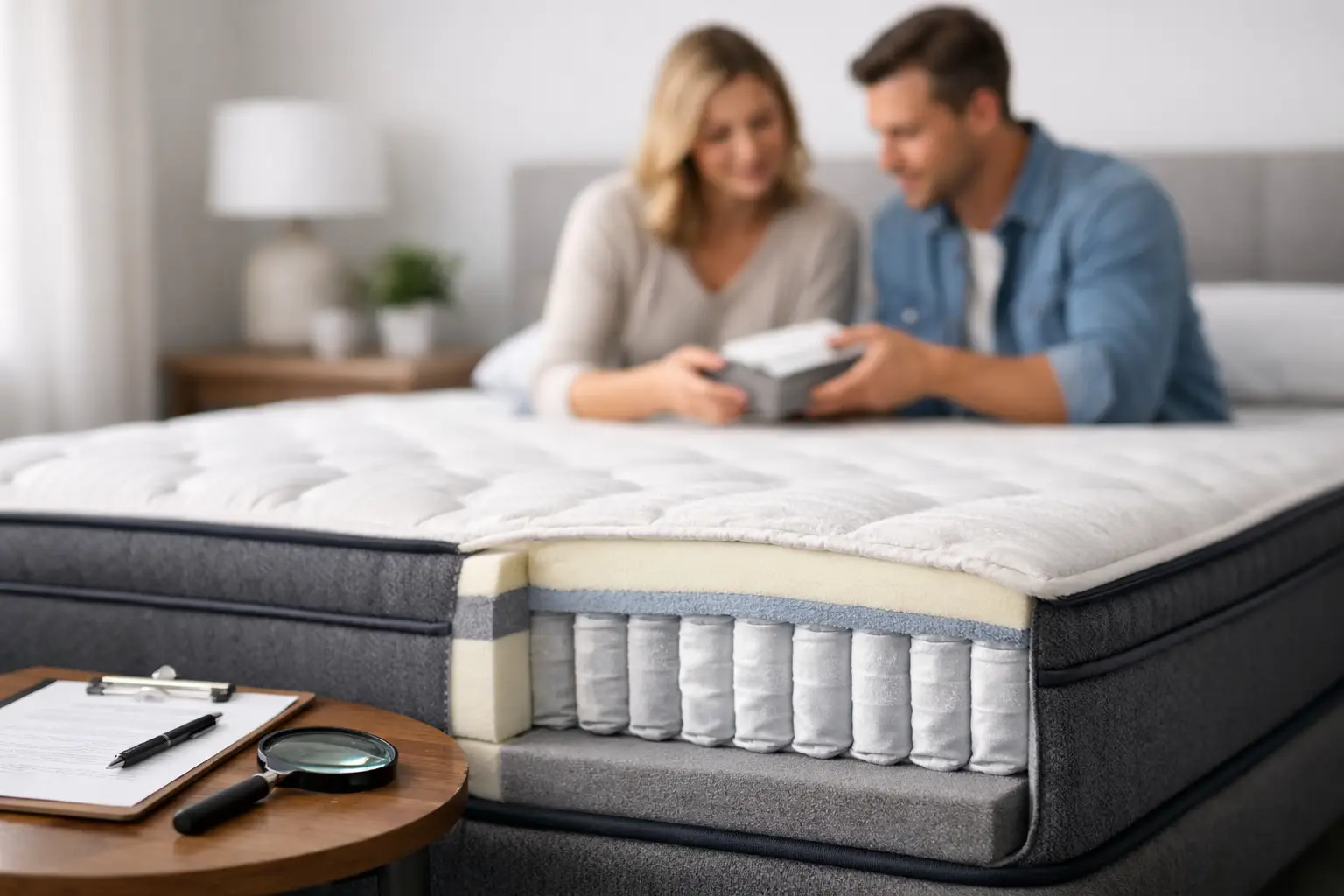
You can tell within the first few nights when a mattress looked good in the showroom but does not really suit your body. Maybe your hips sink too far, your shoulders stay tense, or your partner’s every turn wakes you up. A good hybrid mattress review guide helps you catch those issues before you spend on the wrong bed.
Hybrid mattresses are popular for a reason. They combine foam comfort layers with a coil support core, which means they usually aim for a middle ground – more cushioning than a traditional innerspring, but more lift and airflow than an all-foam mattress. For many households, that balance works well. But “hybrid” on its own does not tell you enough. The real question is which hybrid mattress fits your sleep style, body weight, budget, and comfort preference.
What a hybrid mattress actually feels like
A hybrid mattress usually has two personalities. The top layers shape the surface feel, while the springs underneath control support, bounce, and stability. If the comfort layer uses memory foam, the bed may feel more contouring and pressure-relieving. If it uses latex or responsive foam, the surface may feel quicker and easier to move on.
That matters because not every sleeper wants the same sensation. Some people like a slight hug around the shoulders and hips. Others want to lie more on top of the mattress, not in it. When reading reviews, focus less on broad labels like “luxury comfort” and more on descriptions of how the mattress responds when weight is applied.
A hybrid mattress review guide should start with support, not softness
Softness gets attention first, but support is what affects sleep quality over time. A mattress can feel plush for ten minutes and still be wrong for your spine after six hours. That is why the best hybrid mattress review guide starts by checking how the bed holds your body in alignment.
Back sleepers often do best with a medium to medium-firm hybrid that keeps the lower back supported without feeling hard. Side sleepers usually need more pressure relief at the shoulders and hips, so a slightly softer comfort layer can help. Stomach sleepers often need a firmer, flatter feel to prevent the midsection from dipping too much.
Body weight changes the experience too. A lighter sleeper may find a medium hybrid quite firm, while a heavier sleeper may compress the same mattress more deeply and describe it as softer. This is one reason online reviews can seem inconsistent. The mattress may not be changing – the reviewer’s body type is changing the feel.
Why edge support matters more than many buyers expect
If you sit on the side of the bed to get dressed, or if two people share a smaller mattress size, edge support deserves attention. Stronger edges make the mattress feel more usable across the full surface. Weaker edges can create that rolling-off sensation, even if the middle feels comfortable.
Many hybrid models perform better here than all-foam options because the coil system adds structure. Still, not all hybrids are equal. Some use reinforced perimeter coils, while others do not. If your room layout is compact or you are trying to maximize every inch of your bed, this detail becomes more important.
Pressure relief and motion control are often a trade-off
This is where a lot of mattress shopping gets tricky. The more responsive and bouncy a mattress is, the easier it usually is to move around on. But that same bounce can transfer more motion from one sleeper to another. On the other hand, thicker foam comfort layers often absorb motion better, yet they may feel less responsive.
For couples, there is rarely a perfect score in every category. If one person is a light sleeper and the other tosses and turns, motion isolation should move higher on the priority list. If both sleepers prefer a bed that feels easy to reposition on, a very deep memory foam feel may not be the best fit.
A balanced hybrid often lands in a useful middle zone. It can reduce partner disturbance better than a classic spring mattress while still feeling easier to move on than a dense foam bed. That is exactly why hybrids appeal to practical buyers who do not want extreme softness or excessive bounce.
Cooling claims need a closer look
Almost every mattress brand talks about cooling, but the actual performance depends on construction, not just marketing language. A hybrid has a natural advantage because coils allow more airflow than a solid foam core. That said, the comfort layers still matter. If the top section is thick, dense, and body-hugging, it may still sleep warmer than expected.
When reviewing a hybrid mattress, look at the whole setup. Breathable knit covers, gel-infused foams, latex-like comfort layers, and pocketed coils can all help. But cooling is also personal. If you naturally sleep hot, a mattress that is merely “temperature neutral” may still not feel cool enough to you.
In warmer climates and for homes where air conditioning use varies through the night, this can be a real comfort issue, not a small feature. A mattress that traps less heat can improve sleep consistency, especially for couples.
How to read firmness ratings without getting misled
Firmness numbers are useful, but they are not universal. One brand’s 6 out of 10 can feel like another brand’s 7. This is why written review details matter more than the rating alone.
A better approach is to translate firmness into behavior. Does the mattress let your shoulders sink while keeping your waist supported? Does it feel buoyant or slow-moving? Does it stay level near the edges? Those answers tell you more than a simple number.
If you are furnishing a primary bedroom and want a safer all-around choice, medium-firm hybrids often have the broadest appeal. They tend to suit couples with different preferences better than very soft or very firm models. But if you already know you have pressure point issues or lower back sensitivity, it is worth being more specific than “medium-firm.”
Materials affect durability as much as comfort
A hybrid mattress can sound premium and still disappoint if the comfort layers are too thin or low density. The coil unit may hold up well, but if the top foam compresses early, the mattress can lose comfort long before it loses structure.
That is why a proper review should consider durability, not just first impressions. Thicker comfort systems are not automatically better, but they should be substantial enough to cushion without flattening too quickly. Pocketed coils are generally preferred because they contour better and reduce motion transfer compared with older connected spring systems.
This is also where honest value matters. A lower price can be excellent value if the mattress suits your sleep needs and uses reliable materials. But a cheap hybrid that needs replacing too soon is not really saving you money.
Who should buy a hybrid mattress
Hybrid mattresses work especially well for buyers who want balance. If you find all-foam beds too warm, too sinking, or too hard to move around on, a hybrid may feel more comfortable. If you find traditional innersprings too stiff or too bouncy, a hybrid often gives you more pressure relief without losing support.
They are also a strong option for couples, combination sleepers, and households shopping for a main bedroom mattress rather than a highly specialized sleep surface. For many people, a hybrid is the practical middle path.
Still, it depends on what you value most. If you want maximum contouring and almost no motion transfer, an all-foam mattress may be better. If you want a very firm, simple, springy feel, a classic innerspring might suit you. Hybrid is not automatically best – it is best when your needs sit between those two extremes.
Red flags to watch for in reviews
A mattress review is more useful when it includes trade-offs. Be cautious if every feature sounds perfect. Real mattresses have strengths and compromises.
Look for specific comments on edge support, heat retention, partner disturbance, and how the mattress feels in different sleep positions. Reviews that only praise “comfort” without explaining what kind of comfort are not very helpful. Also pay attention to whether the reviewer mentions body type, sleep style, and how long they used the mattress. A first-night opinion is not the same as a two-month experience.
For shoppers comparing established names such as Dozi, Lady Americana, Maxcoil, Sleepy Night, and Fourstar, this matters even more. Two mattresses can look similar on paper but feel very different once you account for foam type, coil design, and overall build.
The smartest way to choose one
Start with your non-negotiables. If you sleep hot, make cooling a priority. If you share the bed, motion control and edge support should be high on the list. If you wake up with pressure points, focus on the comfort layers first. If lower back support is your main issue, check whether the mattress keeps your hips from sinking too deeply.
Then be realistic about budget. A mattress is a daily-use item, but that does not mean you need the most expensive model in the showroom. Good value comes from matching the mattress to your body and routine, not from chasing the highest price tag. For many buyers, the right hybrid is the one that feels supportive, stable, and comfortable enough to disappear once you fall asleep.
If you are comparing options for a new home, especially when you are also budgeting for bed frames, storage furniture, and the rest of the bedroom setup, it helps to work with a retailer that can explain trade-offs clearly instead of overselling one model. That kind of advice saves more money than any flashy promotion.
The best mattress choice is rarely the one with the loudest claims. It is the one that fits the way you actually sleep, night after night.