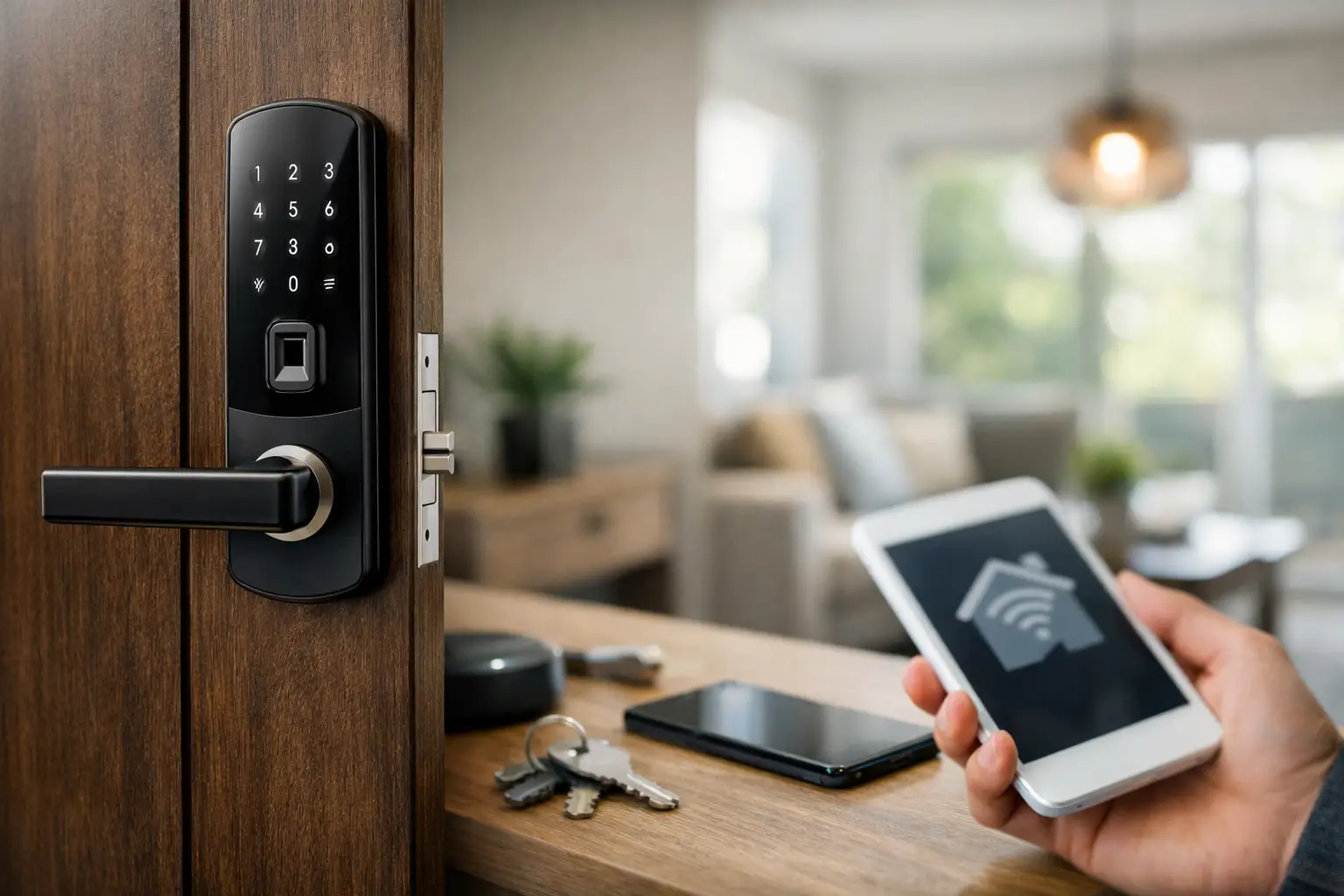
You usually notice your front door lock at the worst possible time – when your hands are full of groceries, your child is asleep on your shoulder, or your keys are somewhere at the bottom of a bag you swore was organized. A good digital door lock buying guide should make that daily moment easier, not more complicated. If you are choosing one for a new home or replacing an old lock, the right pick comes down to how you live, who needs access, and how much convenience you actually want.
For many homeowners, a digital lock sounds simple at first. No keys, faster entry, better security. But once you start comparing models, the choices pile up quickly. Fingerprint, PIN code, RFID card, app control, auto-lock, gate compatibility, fire-rated options, mortise lock, rim lock – suddenly it feels less like a small upgrade and more like a technical project. The good news is that most buyers do not need the most advanced model. They need the one that fits their door, routine, and budget with the fewest headaches.
What this digital door lock buying guide should help you decide
The first question is not which brand is best. It is whether a digital lock actually suits your household. For most families, couples, and busy working adults, the answer is yes. It removes the need to duplicate keys, makes temporary access easier for relatives or helpers, and gives you more control over who can enter and when.
That said, convenience only matters if the lock works smoothly in real life. A sleek model with features you never use is not better value than a simpler lock that performs reliably every day. If your priority is quick access for family members, a fingerprint and PIN setup may be enough. If you often have visitors, renovation workers, or part-time household help, app-based access logs and one-time passcodes may be worth paying for.
Start with your door, not the features
This is where many buyers get tripped up. Before looking at finishes and smart functions, check your door type. A digital lock must match the material, thickness, and lock structure of your existing door. Main wooden doors, metal gates, glass doors, and bedroom doors often require different lock styles.
Mortise locks are common for main doors and are usually chosen when buyers want a cleaner built-in look with stronger latching. Rim locks are often easier for retrofit situations and can be a practical option if your current setup does not support a mortise installation. If you have both a main door and a front gate, you may also want a matching access solution for each. Some households prefer a digital lock on the wooden door and a simpler setup on the gate to manage costs.
If you are not sure what your door can support, measure first. Door thickness, backset, and handle direction all matter. This is one of those purchases where a quick consultation can save you from buying the wrong model and paying extra for changes later.
Choose access methods based on your household habits
Most digital locks offer a combination of access methods, but not every family needs all of them. Fingerprint access is popular because it is fast and easy for daily use. It works well for adults and older children, though very young kids and elderly users with faint fingerprints may find PIN entry more dependable.
PIN codes are the most familiar backup and are almost always worth having. They are simple, effective, and useful when fingerprints fail because of wet hands, cuts, or sensor issues. RFID cards or tags can be a good fit for children, older family members, or anyone who prefers tapping over remembering codes.
App control sounds appealing, and for some households it truly is. Remote unlocking, access history, and temporary passcodes can be convenient, especially if you receive deliveries or need to let someone in while you are away. But app-based models usually cost more, may rely on extra gateways or Wi-Fi modules, and add another layer of setup. If you know you will never use those features, you may be happier with a simpler lock.
Security features that matter most
A digital lock should feel easy to use without feeling easy to defeat. In any digital door lock buying guide, a few security basics matter more than marketing claims.
Auto-lock is one of the most useful features because it removes the human error of forgetting to lock up. Wrong-code alarms and tamper alerts add another layer of protection and are worth having on a main entrance. Mechanical key override is also important. It may not be glamorous, but it gives you a backup if batteries run out or electronics fail.
Some models also include privacy mode, passage mode, or double-locking features. These can be useful depending on the setup. Privacy mode helps when you want to restrict outside access while you are home. Passage mode may be useful during gatherings or move-in days when people are going in and out constantly. The right mix depends on whether your lock is for a primary residence, rental unit, or secondary door.
Battery life, backup access, and maintenance
Digital locks are low-maintenance, but they are not zero-maintenance. Most run on batteries, and battery life varies based on usage and features. A lock with app connectivity and frequent access events may need replacement sooner than a basic keypad model.
Look for low-battery warnings and emergency power options, such as external battery contact points. These details may seem minor when you are shopping, but they matter a lot when you come home late and the lock has no power left. Good models are designed to give plenty of warning before that happens.
Maintenance is usually simple. Keep the sensor clean, replace batteries on schedule, and avoid forcing the handle if the alignment feels off. If your door shifts over time, especially in humid conditions, the issue may be the door alignment rather than the lock itself.
Smart features are useful, but only when they solve a real problem
A lot of buyers assume more technology means better value. Sometimes it does. Sometimes it just means you paid for features that stay unused.
If you manage a busy household, app notifications, audit trails, and scheduled access can be genuinely helpful. If you are furnishing a new home and want a more connected setup, a smart lock can fit nicely with your overall plan. But if your goal is simply keyless entry and dependable daily access, there is nothing wrong with choosing a solid non-connected model.
This is especially true for budget-conscious homeowners. The best value is not the cheapest lock on the page, and it is not automatically the most expensive one either. It is the one that gives you the features you will actually use, with reliable after-sales support and proper installation.
Budgeting for the full cost, not just the lock
When comparing prices, factor in more than the product itself. Installation, door modification, gate compatibility, and optional add-ons can change the final cost. A lock that looks affordable at first may become less attractive if your door needs extra work.
It is also worth thinking about how long you expect to stay in the home. If this is your long-term family home, spending more for better durability and better user management may make sense. If you are furnishing on a tighter move-in budget, a mid-range model with core features may be the smarter buy.
For many households, spreading out home purchases matters just as much as choosing them. When you are already budgeting for a mattress, sofa, dining set, and other essentials, a digital lock should improve your home setup without creating unnecessary financial pressure. That is why practical value usually wins over flashy extras.
A simple digital door lock buying guide for narrowing your options
If you want to narrow the shortlist quickly, think in terms of lifestyle. A young couple in a condo may want fingerprint access, PIN backup, and auto-lock. A family with children may benefit from RFID tags and multiple user profiles. A home with frequent visitors may get more value from app control and temporary codes. And if older parents will use the lock often, ease of use should carry more weight than novelty.
This is also where showroom support or patient product guidance makes a difference. You can read specs online all day, but real buying confidence often comes from asking the basic questions out loud and getting honest answers. At Catnap Lair, that same practical approach matters across the home – choose what fits your space, your routine, and your budget, not just what looks impressive in a product photo.
A digital door lock is a small part of the home, but it is one of the few things you use every single day. Choose the one that makes coming home feel easier, safer, and a little less hectic.