A mattress can feel excellent during a quick showroom test and still be wrong after seven nights of restless sleep. That is why the Maxcoil vs Sleepy Night decision should not come down to brand recognition alone. The better choice depends on how you sleep, whether you share the bed, how warm your room feels, and how much support your body needs every morning.
Both brands offer options aimed at practical homeowners who want better rest without paying luxury-store prices. However, individual models within each range can feel very different. Instead of asking which brand is universally better, focus on which mattress construction and comfort level suit your household.
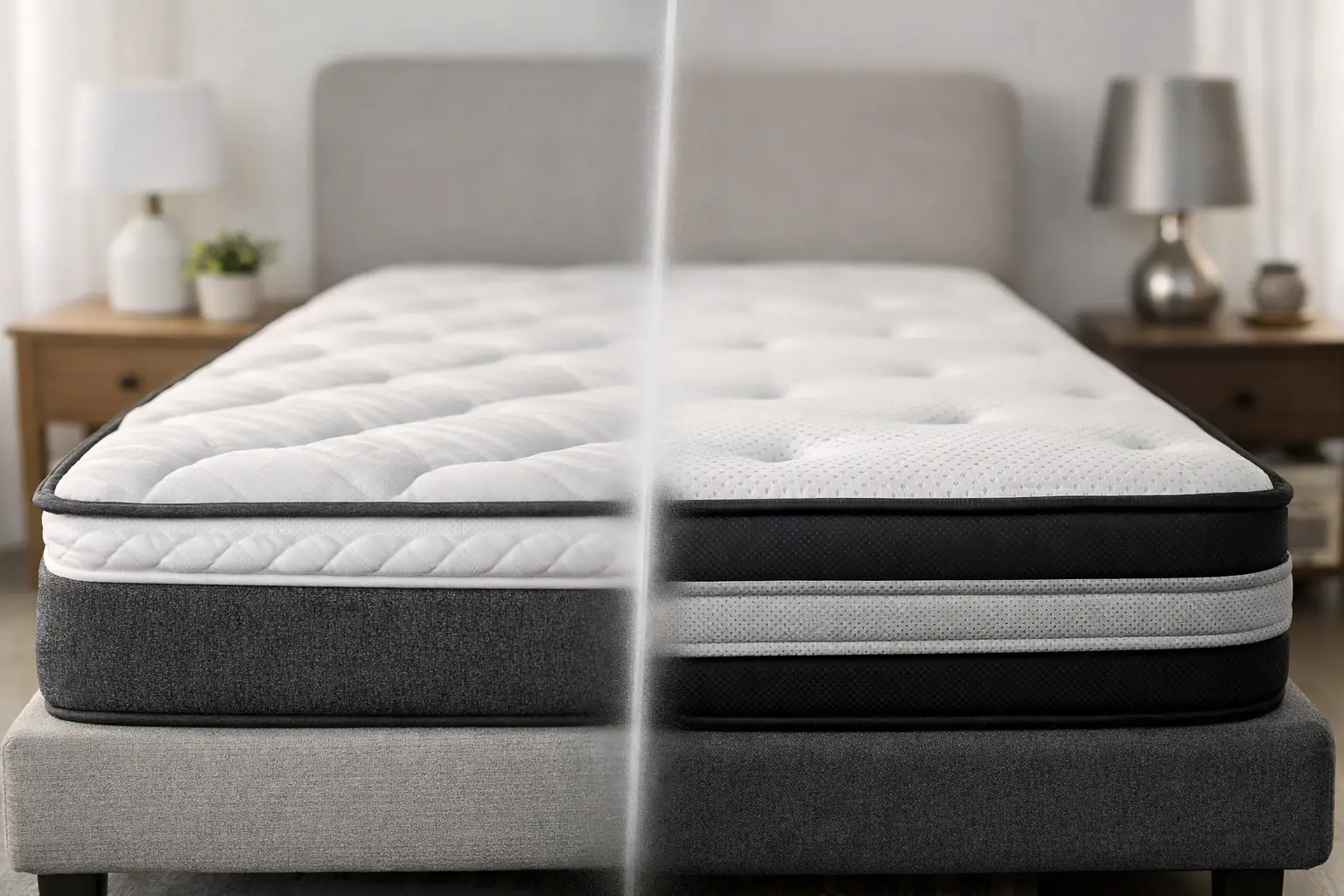
Maxcoil vs Sleepy Night: The Main Difference
Maxcoil is often considered by shoppers looking for a more established mattress range with varied comfort technologies, including pocketed spring, foam, latex, and hybrid-style options depending on the model. Many buyers are drawn to Maxcoil when they want targeted support, stronger edge stability, or a more substantial mattress feel.
Sleepy Night is commonly a practical option for shoppers focused on everyday comfort and value. Its range can appeal to buyers who want a straightforward mattress for a guest room, a first home, a child’s room, or a master bedroom without stretching the furnishing budget too far.
That does not mean every Maxcoil mattress will feel firmer or every Sleepy Night mattress will feel softer. Materials, spring count, foam density, thickness, and pillow-top design all change the experience. Compare the specific models in front of you, not just the brand names on the label.
| What to compare | Maxcoil may suit you if | Sleepy Night may suit you if | |—|—|—| | Support preference | You want more choices in structured or supportive builds | You prefer practical comfort at a value-focused price point | | Mattress use | You are shopping for a long-term main bedroom mattress | You need a reliable option for everyday or secondary use | | Budget approach | You can invest more for specific comfort features | You want to manage a full-home furnishing budget carefully | | Feel | You want to explore a wider mix of spring and premium comfort layers | You want a simpler, familiar mattress feel |
Support Matters More Than Firmness Labels
A common mistake is assuming firm automatically means supportive. A very firm mattress can create pressure at the shoulders and hips, while a medium-feel mattress with good internal support can keep the spine in a healthier position. The goal is not to sleep on the hardest surface. It is to feel supported without feeling pushed against.
For back sleepers, medium-firm to firm support is often a sensible starting point. The mattress should prevent the hips from dipping too far while still allowing the lower back to relax. For stomach sleepers, a firmer surface can help keep the midsection from sinking. Side sleepers often need more cushioning at the shoulder and hip, so a medium or medium-plush top layer may feel more comfortable.
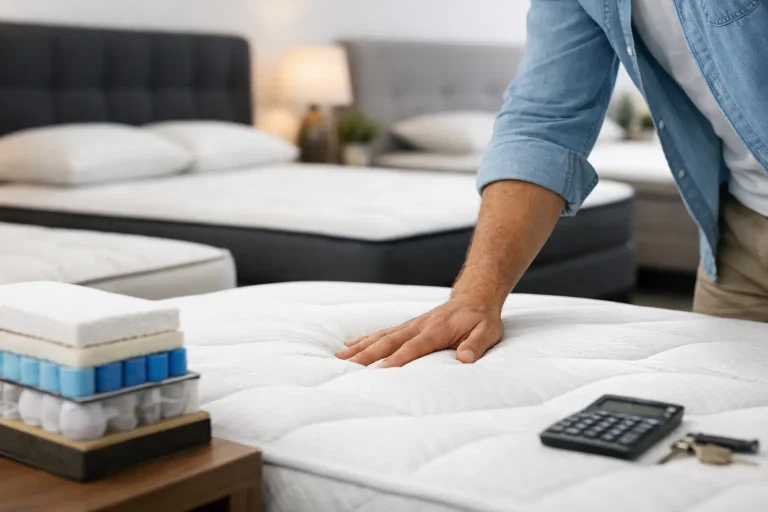
When comparing Maxcoil and Sleepy Night models, lie down in your usual sleep position for at least 10 to 15 minutes. If you are visiting a showroom as a couple, test the mattress together. One partner’s weight, movement, and preferred sleeping position can change what feels comfortable for the other.
Check for pressure, not just softness
A mattress can feel soft at first touch but still create pressure once your body settles. While testing, notice whether your shoulder feels compressed when lying on your side or whether your lower back feels unsupported when lying on your back. Numb arms, frequent turning, and a stiff feeling when you wake up are all signs that the comfort level may not be right.
A good mattress should let your muscles relax while keeping your body from sinking unevenly. This is especially important for homeowners replacing an older mattress that has developed a visible dip or sagging center.
Motion Isolation for Couples
If one person gets into bed later, wakes up earlier, or changes positions often, motion isolation deserves more attention than most shoppers give it. Spring construction, foam layers, and mattress thickness can all affect how much movement travels across the bed.
Pocketed spring and hybrid designs often provide a more independent response than traditional interconnected spring systems, though the exact performance varies by model. Foam comfort layers can also reduce surface movement. If you are deciding between a Maxcoil mattress and a Sleepy Night mattress for a shared bed, ask to test this directly. Have one person sit or turn on one side while the other lies still on the other side.
This small test is more useful than relying on a general claim about the brand. Couples do not need zero movement transfer to sleep well, but less disturbance can make a meaningful difference over time.
Cooling Comfort in a Warm Bedroom
A warm sleeper may prioritize different features than someone who is mainly concerned about back support. Thick memory foam can feel pressure-relieving, but some people prefer the airflow and quicker response of a spring-forward or latex-style construction. Quilted tops, breathable fabrics, gel-infused foams, and ventilation features may help, but they should be viewed as part of the overall build rather than a guarantee that a mattress will feel cool.
Your bedroom setup also matters. A mattress placed on a well-ventilated bed frame may perform differently from one placed on a solid base with limited airflow. In compact homes, where bedrooms can feel warmer and have less air circulation, this becomes a practical consideration.
If heat is a concern, ask about the materials directly: Is the comfort layer dense foam, latex, fiber, or a combination? Is there a spring system beneath it? Does the cover feel breathable? These questions will give you a clearer answer than choosing based on the word “cooling” alone.
Budgeting for the Mattress and the Whole Bedroom
The price difference between a Maxcoil and Sleepy Night model may be worth it if the higher-priced option solves a real sleep concern, such as poor edge support, partner disturbance, or recurring pressure discomfort. But spending more is not automatically a better decision. A mattress that is too plush, too firm, or too warm for you will not become more suitable because it costs more.
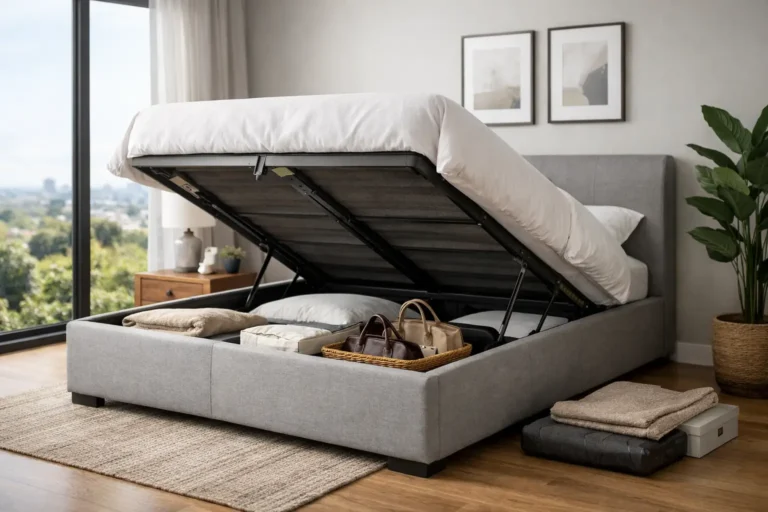
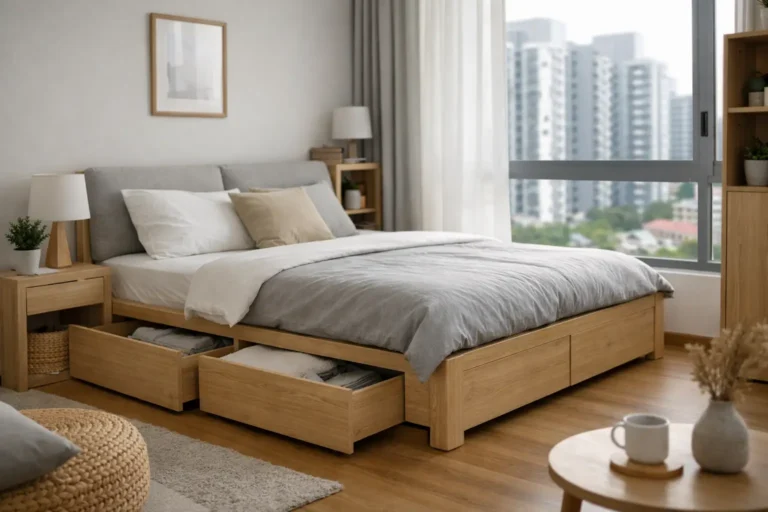
For new homeowners, the mattress budget should also leave room for the rest of the bedroom. A supportive bed frame, the right mattress size, quality bedding, and practical storage can all affect how functional the room feels. A storage bed may be particularly useful when closet space is limited, while a pullout bed can make a guest room work harder without taking over the floor plan.
At Catnap Lair, customers can compare mattress comfort alongside bed frame options and discuss installment choices, which can make it easier to furnish a bedroom without rushing into the wrong purchase. The right plan is one that protects both your sleep quality and your overall home budget.
How to Choose Between Maxcoil and Sleepy Night
Start with the sleeper, not the sale tag. Consider body size, sleep position, heat sensitivity, and whether the mattress will be used nightly by one person or two. Then narrow the choices by comfort feel and construction.
If you want more feature-led choices and are prepared to compare specific support systems, Maxcoil may be the better starting point. If you want a dependable, value-conscious mattress and prefer to keep the buying process simple, Sleepy Night may be the stronger fit. For many households, the final decision comes down to two models that feel good in person rather than a clear brand winner.
Before committing, confirm the mattress dimensions, thickness, warranty terms, recommended bed base, and whether delivery access is suitable for your home. These details are easy to overlook when the focus is on comfort, but they matter once the mattress arrives.
The best mattress is the one you look forward to coming home to – supportive when you need it, comfortable in your usual position, and sensible for the life and budget you are building.