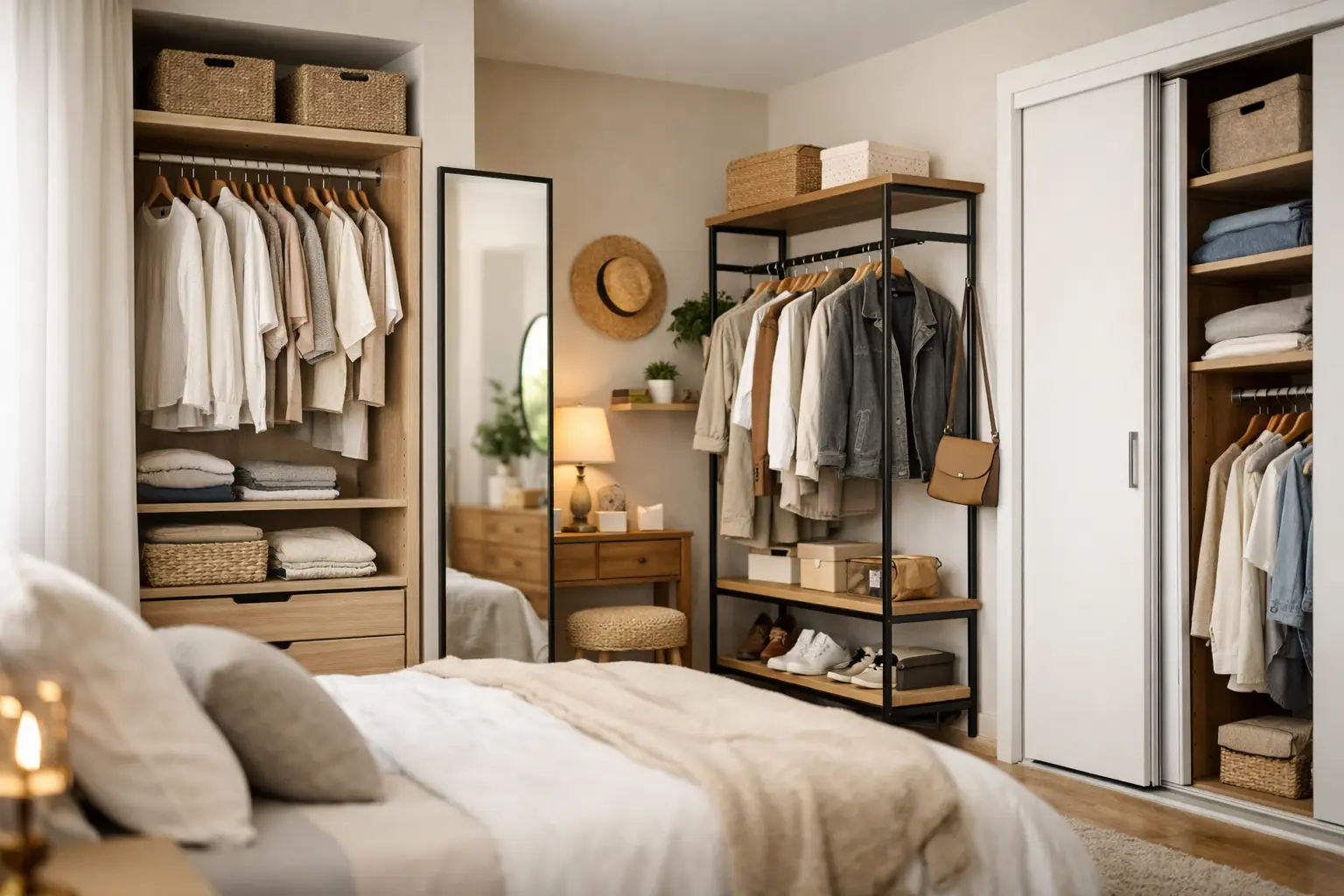
A small bedroom usually feels tight for one reason more than any other – the wardrobe is doing too much, taking up too much, or opening the wrong way. The best wardrobe ideas for small bedrooms are not just about squeezing in storage. They are about making the room easier to move through, easier to keep tidy, and more comfortable to live in every day.
If you are furnishing a compact condo, apartment, or first home, the wardrobe choice matters more than many people expect. A bed can be centered. A nightstand can be downsized. But a bulky wardrobe in the wrong spot can make the whole room feel cramped. That is why it helps to think beyond simple width and look at doors, depth, height, layout, and what you actually need to store.
What makes a wardrobe work in a small bedroom
In a compact room, a wardrobe has to earn its footprint. That means it should give you enough hanging and folded storage without blocking pathways, crowding the bed, or making the room feel visually heavy.
The first thing to check is clearance. A wardrobe may fit on paper, but if hinged doors swing into the bed frame or force you to shuffle sideways to open drawers, it is not the right fit. The second thing is depth. Many people buy deeper wardrobes than they need, then lose valuable walking space. The third is vertical use. In small bedrooms, height often matters more than width.
This is where practical design beats oversized furniture. A smart wardrobe setup helps the room feel calmer because everything has a place, and there is less visual clutter around the bed.
Sliding door wardrobes save the most day-to-day space
For many homeowners, this is the easiest win. Sliding doors remove the need for front clearance, which makes a big difference when the bed sits close to the wardrobe. In narrow rooms, that can be the difference between a usable layout and an annoying one.
Sliding wardrobes also tend to look cleaner from the front, especially in modern bedrooms where you want fewer visual interruptions. If you choose a simple finish and minimal handles, the wardrobe recedes instead of dominating the room.
There is a trade-off, though. With sliding doors, you only access one side at a time. For some people, that is perfectly fine. For others, especially couples sharing one wardrobe, it may feel a little less convenient during busy mornings. Good internal organization helps a lot here.
Full-height wardrobes make small bedrooms work harder
One of the best wardrobe ideas for small bedrooms is to build upward, not outward. A full-height wardrobe uses the vertical space all the way to the ceiling, which gives you extra storage without increasing the footprint.
This upper section is ideal for less frequently used items like spare bedding, luggage, seasonal clothes, or storage boxes. Keeping those items off the floor and out of random corners immediately makes the bedroom feel more open.
Visually, full-height wardrobes can also make a room feel more intentional. Instead of a short, bulky cabinet with dead space collecting dust above it, you get a cleaner wall line. In smaller bedrooms, that tidy look matters.
Mirror-front wardrobes help the room feel bigger
A mirrored wardrobe is a practical choice that also improves the feel of the space. The obvious benefit is function – you get a full-length mirror without needing another piece of furniture. The less obvious benefit is that mirrors reflect light and create a sense of depth, which can make a compact bedroom feel less boxed in.
This works especially well in rooms with limited natural light. A mirrored surface can bounce brightness around the room and reduce the heavy appearance wardrobes sometimes have.
Of course, mirrors are not for everyone. Some homeowners prefer a softer look with matte finishes or wood tones. If that is your style, you can still create visual lightness by choosing lighter colors and simple panel designs.
Narrow-depth wardrobes are often the better choice
A common mistake in small bedrooms is assuming bigger storage is always better. In reality, a wardrobe that is too deep can steal enough floor space to make the room uncomfortable. If your clothing mix allows it, a slightly narrower wardrobe can be the smarter option.
This is especially useful for guest rooms, children’s rooms, or bedrooms where the main wardrobe storage is split between two areas. You may not need maximum depth if most of what you store is folded wear, short hanging items, or essentials for one person.
The trade-off is internal capacity. A shallower wardrobe may limit what can be hung comfortably, so it depends on your clothing habits. But for many compact homes, gaining back those few inches in floor space is worth it.
Corner wardrobes can rescue awkward layouts
Some bedrooms have dead corners that seem unusable until you plan around them properly. A corner wardrobe can turn that awkward area into real storage while freeing up the main wall for the bed or a smaller dresser.
This idea works well in rooms with unusual door placement, windows that break up the wall, or layouts where a standard wardrobe leaves wasted gaps. Instead of forcing a straight unit into a poor position, a corner solution follows the room more naturally.
It is not always the cheapest option, and internal access can be slightly less straightforward depending on the design. Still, in tricky bedrooms, a corner wardrobe can be the layout fixer that makes everything else fall into place.
Open sections keep the wardrobe from feeling bulky
Not every wardrobe has to be one large block of closed doors. In some small bedrooms, mixing closed storage with a small open section can make the unit feel lighter and more useful.
For example, an open niche can hold baskets, daily essentials, or decor that softens the look of the wardrobe wall. A small open section near a vanity area can also work well for quick-access items. This breaks up the visual mass and can make the furniture feel less imposing.
That said, open storage only works if you are likely to keep it neat. If clutter builds up easily, fully closed wardrobes may be the better choice. Small rooms feel crowded faster when everything is on display.
Built-in style planning beats oversized freestanding pieces
Even when you choose a freestanding wardrobe, it helps to think like a built-in planner. Measure the wall carefully. Look at socket positions, skirting, door swing, curtain clearance, and how close the bed sits to the wardrobe front. Small-room success usually comes from precise planning, not just buying a smaller item.
A wardrobe that fits the wall cleanly, without large side gaps or wasted top space, looks better and functions better. It can also reduce the temptation to add extra storage pieces later, which is often what makes a compact bedroom start feeling overcrowded.
This is where experienced guidance matters. At Catnap Lair, we see many homeowners focus only on style first, then realize the room flow is wrong after delivery. A better approach is to start with measurements, movement, and storage needs, then choose the finish.
Lighter finishes usually feel better in compact rooms
Dark wardrobes can look beautiful, but in a very small bedroom they may add visual weight. Lighter wood tones, soft gray, white, beige, or muted finishes generally help the space feel more open.
This does not mean every small bedroom has to be pale and plain. Contrast can still work. A warm oak finish, slim black handles, or a mirrored panel can add character without making the room feel heavy. The goal is balance.
If your bedroom already has a darker bed frame or bold wall color, a lighter wardrobe often keeps the overall look from becoming too dense. On the other hand, if the room gets strong daylight and has enough breathing room around the furniture, a darker wardrobe may still work beautifully.
Internal storage matters as much as the outside
A wardrobe can look compact and smart from the outside but still fail if the inside is poorly arranged. In small bedrooms, interior layout matters because you have less room for backup storage elsewhere.
Think about how much hanging space you really need versus shelves or drawers. Long hanging sections are useful, but they can waste space if most of your clothes are folded or short. Double hanging rails, top shelves, and drawer combinations often give better everyday function.
For couples, split the interior in a way that reflects actual use, not just equal halves. One person may need more hanging space while the other needs more shelves. Practical planning prevents overflow onto chairs, bed ends, and every other surface in the room.
The best wardrobe choice depends on how the bedroom is used
There is no single best answer for every home. A primary bedroom may benefit most from a full-height sliding wardrobe with mirrors. A child’s room may work better with a narrower wardrobe and more open floor area. A guest room may only need a compact unit with shelves and a small hanging section.
That is why the right question is not, which wardrobe is biggest? It is, which wardrobe gives this room the best balance of storage, comfort, and movement?
When you get that balance right, a small bedroom stops feeling like a compromise. It starts feeling organized, restful, and much easier to enjoy. If you are choosing now, prioritize the layout you want to live with every day, not just the wardrobe that looks good in a photo.