
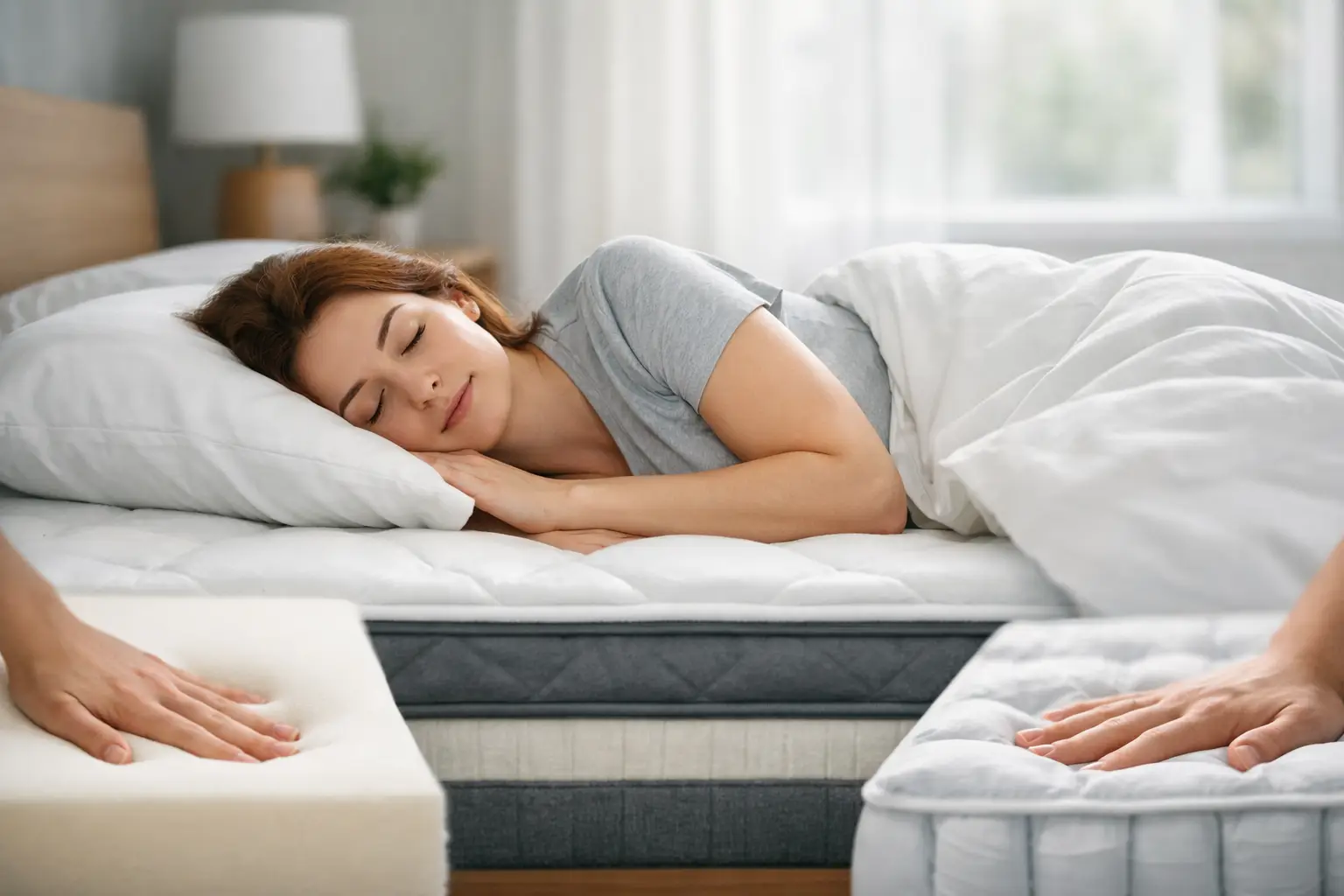
If you sleep on your side and wake up with a sore shoulder, numb arm, or tight lower back, your mattress is usually part of the problem. That is why so many shoppers ask what mattress suits side sleepers – because side sleeping is comfortable for many people, but only if the mattress relieves pressure without letting the body sink out of alignment.
Side sleepers need a careful balance. Too firm, and the mattress pushes back against the shoulders and hips. Too soft, and the waist, pelvis, and spine can dip too deeply. The right mattress should cushion the parts of your body that press hardest into the bed while still keeping your spine in a fairly straight line from neck to lower back.
What mattress suits side sleepers in real life?
For most side sleepers, the best option is a medium soft to medium firm mattress, usually around 4 to 6.5 on the firmness scale. That range tends to give enough contouring for pressure relief while still offering support through the core of the mattress.
That said, body weight changes the answer. A lighter sleeper often needs a slightly softer feel because they do not sink in as deeply. A heavier sleeper usually does better with a medium firm feel and stronger support layers underneath, otherwise the hips may drop too much. If two people share a bed and have different builds, the right choice often lands somewhere in the middle, with a comfort layer that cushions well and a support base that stays stable.
This is where honest mattress shopping matters. There is no single mattress that suits every side sleeper. Your weight, pain points, and whether you sleep fully on your side or more in a side-back combination all affect what feels right.
Why side sleepers need more pressure relief
When you lie on your back, your weight spreads more evenly. On your side, it concentrates around narrower contact points, mainly the shoulders and hips. Those areas need space to settle into the mattress slightly. If they cannot, pressure builds and you feel it as aches, tossing and turning, or that familiar dead-arm feeling in the morning.
The mattress also needs to support the waist. Since the side body has curves, there is a gap between your midsection and the mattress surface. A good mattress fills that gap gently instead of leaving it unsupported. That is what helps maintain healthier spinal alignment.
Many shoppers focus only on softness, but softness alone is not the goal. Side sleepers usually need contouring, not collapse. A mattress can feel plush on top while still being supportive underneath, and that combination is often much more effective than choosing the softest bed in the showroom.
The best firmness for side sleepers
If you want the short answer, most side sleepers are happiest on medium or medium firm mattresses with a pressure-relieving top layer. That tends to work well for adults who want comfort without that stuck feeling.
A softer mattress may suit petite sleepers, especially under 130 pounds, because firmer beds can feel hard to them. On the other hand, sleepers above 230 pounds often need denser foams, firmer latex, or stronger coil systems to keep the hips from sinking too far.
Couples often assume firmness is the only decision, but mattress responsiveness matters too. If one partner moves a lot or shifts positions at night, a side sleeper may prefer a mattress that cushions pressure but still allows easy movement. That usually points to hybrid or latex designs over very soft all-foam builds.
What mattress materials suit side sleepers best?
Material affects how a mattress feels almost as much as firmness does.
Memory foam is popular with side sleepers because it molds closely around the shoulders and hips. It can be excellent for pressure relief and motion isolation. The trade-off is that some people find it warmer or slower to respond when changing positions.
Latex gives contouring too, but with more bounce and a slightly lifted feel. Many side sleepers like latex because it cushions without making them feel trapped. It can also sleep cooler than traditional memory foam, though the surface feel is less hug-like.
Hybrid mattresses combine foam comfort layers with pocketed coils underneath. For many households, this is the sweet spot. You get enough pressure relief for side sleeping plus stronger support, airflow, and easier movement. If you share the bed or want something that feels balanced rather than overly plush, a hybrid is often a smart choice.
Traditional innerspring mattresses can work, but only if they have enough comfort padding on top. A basic spring mattress with a thin surface often feels too firm at the shoulders and hips for dedicated side sleepers.
Signs your current mattress is wrong for side sleeping
Sometimes the body tells you before you realize the mattress is the issue. If you regularly wake up with shoulder pressure, hip soreness, tingling arms, or stiffness through the lower back, your mattress may not be giving enough contouring or support.
Another sign is frequent turning. Side sleepers tend to change positions more often when pressure builds up. If you settle into bed comfortably but start fidgeting after an hour, the comfort layers may be too firm or too thin.
Sagging is another red flag. Once a mattress develops body impressions, side sleepers often feel the effect quickly because the hips and waist no longer stay aligned. Even a mattress that used to feel comfortable can stop working once its support layers begin to weaken.
What side sleepers with back pain should look for
If you are a side sleeper with back pain, do not assume a firmer mattress is automatically better. That advice gets repeated often, but it is incomplete. A mattress that is too firm can create pressure at the shoulders and push the spine out of neutral just as easily as a mattress that is too soft.
Instead, look for a mattress with targeted pressure relief and a stable support core. Zoned support can help, especially if the mattress is slightly softer under the shoulders and firmer under the hips. This kind of construction can be very useful for sleepers who carry more weight through the midsection or who alternate between side and back sleeping.
Your pillow matters too. Even the right mattress can feel wrong if your pillow is too low or too high. For side sleepers, the pillow should usually fill the space between your head and shoulder so your neck stays aligned with the rest of your spine.
How to choose what mattress suits side sleepers in a shared bed
Shopping for one sleeper is straightforward. Shopping for two is where real-life compromises come in.
If one person is a side sleeper and the other sleeps on their back or stomach, a true medium feel is often the safest starting point. It gives the side sleeper enough cushioning while still staying supportive enough for the partner. A hybrid mattress usually handles this better than an ultra-soft foam bed.
Motion isolation matters as well. Side sleepers are more likely to notice disruptions if they are already shifting to relieve pressure. Foams tend to absorb movement better, while coils add bounce. A well-built hybrid can balance both, which is why many couples prefer it.
Budget matters too, and it is worth being practical. The cheapest mattress is rarely the best value if it loses support quickly. A better approach is to look for quality materials, honest comfort specs, and a retailer that offers guidance instead of pushing the most expensive model.
A smarter way to test a mattress
When trying a mattress, do not just sit on the edge or lie down for thirty seconds. Spend several minutes on your usual side-sleeping position. Pay attention to whether your shoulders feel jammed, whether your hips sink too deeply, and whether your waist feels unsupported.
If you are shopping with a partner, test it together. Shared weight changes how some mattresses perform. Ask simple questions: Do you feel pressure at the shoulder? Can you turn easily? Does the mattress feel stable when your partner moves?
At Catnap Lair, this is exactly where patient guidance makes a difference. Mattress buying should not feel like guesswork, especially when comfort, support, and budget all need to line up.
The best mattress for a side sleeper is rarely the firmest or the softest one on the floor. It is the one that eases pressure at the shoulders and hips, supports the waist and lower back, and still feels comfortable night after night. If a mattress lets your body relax without losing alignment, you will usually know it by the way you feel the next morning.