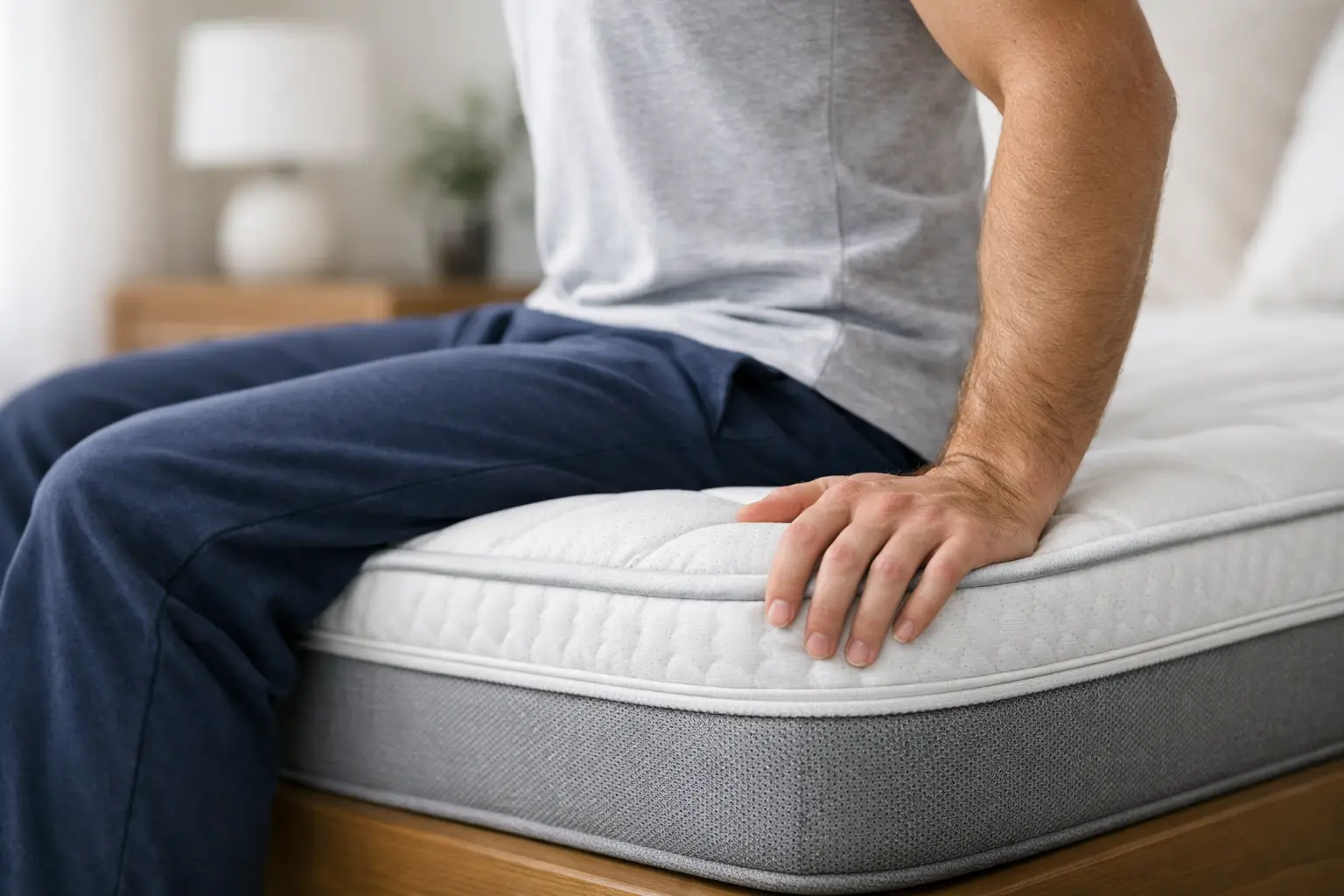
You notice mattress edge support the moment you sit down to put on your socks. If the side caves in, the bed feels smaller, weaker, and less secure than it looked in the showroom. For many shoppers, that detail gets overlooked until the mattress is already at home.
Edge support is exactly what it sounds like – how well a mattress holds its shape and stability around the perimeter. Good edge support helps the sides feel steady when you sit, sleep near the edge, or get in and out of bed. Poor edge support can make a mattress feel soft in all the wrong ways, even if the center still feels supportive.
This matters more than people think. A mattress is not just about firmness, cooling, or whether it feels plush for five minutes. It also has to perform in everyday use, especially in homes where couples share a bed, bedrooms are compact, or the bed doubles as a place to sit while getting ready.
What mattress edge support actually does
The first job of mattress edge support is stability. When the perimeter is reinforced well, the mattress feels more even from side to side. You can use more of the surface instead of drifting toward the middle because the outer few inches feel unreliable.
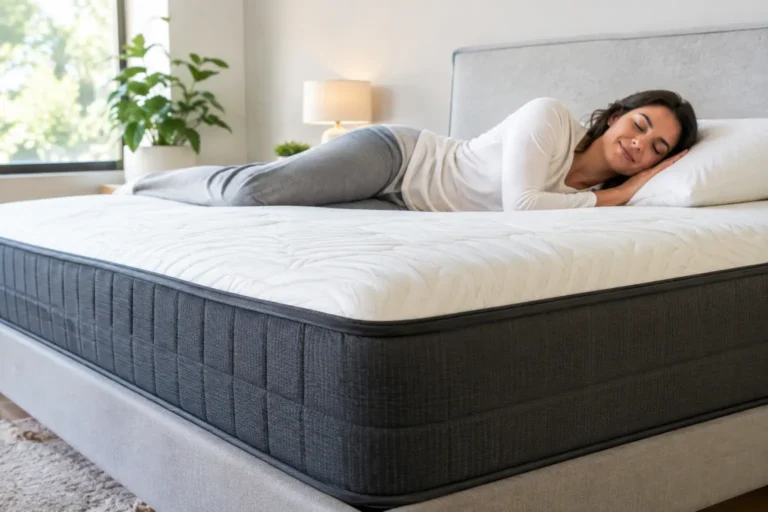
The second job is comfort. Many people sleep closer to the edge than they realize, especially couples on queen-size mattresses. If the border compresses too easily, one sleeper may feel like they are slipping off. That can lead to subtle sleep disruption, even when the mattress feels comfortable at first.
The third job is ease of movement. Stronger edges make it easier to sit, stand, and reposition. This is especially useful for older adults, pregnant sleepers, and anyone with knee, hip, or back sensitivity. A mattress that collapses at the edge can make basic daily movement feel awkward.
Who should care most about mattress edge support
Not every sleeper needs extra-strong edges, but some people will notice the difference right away.
Couples usually benefit the most. When two people share a mattress, every inch counts. Better edge support creates more usable sleep space, which can make a queen feel less cramped and help both sleepers stay comfortable without constantly adjusting.
People using smaller room layouts also tend to care more. In practical homes where bed size has to work around wardrobes, walkways, or storage bed frames, you may not have the option to simply size up. In that case, stronger edge support helps you get more function from the mattress you can actually fit.
It also matters for anyone who sits on the bed regularly. That includes people getting dressed, working briefly on a laptop, feeding a baby, or helping a child settle down at night. If that edge is weak, wear can show up faster in the exact spot you use most.
Why some mattresses have better edge support than others
Mattress construction plays a big role here. Innerspring and hybrid mattresses often perform better on edge support because the structure can include reinforced coils around the perimeter. That creates a firmer border without making the whole mattress feel hard.
Foam mattresses vary more. Some all-foam models use denser foam rails around the sides, while others rely on the same comfort layers from edge to edge. The second type can feel cozy in the center but less stable around the perimeter. That does not automatically make it a bad mattress – it just depends on your priorities.
Latex usually holds shape better than softer memory foam, but comfort design still matters. A soft top layer over a less supportive base can still create a squishier edge feel. This is why product descriptions alone do not tell the full story.
Thickness is not a guarantee either. A taller mattress may look more luxurious, but if the side construction is weak, it can still compress heavily when weight is applied near the edge.
Mattress edge support and firmness are not the same thing
This is where many shoppers get confused. A mattress can feel medium-firm in the middle but still have poor edge support. It can also feel plush on top while staying steady at the sides because the perimeter is built differently.
That is why sitting on the edge for a few seconds tells you something useful, but not everything. The real question is how the edge behaves under everyday use. Does it bounce back? Does it keep you stable when you shift position? Does the mattress still feel supportive if you sleep near the perimeter for a full night?
If you are comparing brands or models, avoid assuming that firmer always means better edge support. Construction quality matters more than a simple firmness label.
Signs the edge support is too weak for your needs
A little compression is normal. A mattress should respond to weight. The problem starts when the edge loses shape too easily or makes you change how you use the bed.
If you avoid sleeping near the side because it feels unstable, that is a clue. If getting out of bed feels harder because the edge sinks too much under your weight, that matters too. Another common sign is when the perimeter starts looking more worn than the center early on, especially if you sit on the same spot every day.
For couples, weak edges often show up as crowding. One person ends up taking the middle because the sides do not feel dependable, and the bed somehow feels smaller than its actual size.
How to test mattress edge support before buying
Start by sitting on the side as you normally would at home. Do not perch lightly. Put your full weight down and notice whether you feel supported or whether the mattress collapses under you.
Then lie down near the edge, not just in the center. You want to know if the perimeter still feels secure when your shoulder or hip is close to the border. If you immediately tense up because you feel like you might roll off, the edge support may not suit you.
Next, pay attention to motion and recovery. When you stand up, does the edge regain its shape quickly? Does it feel springy and supportive, or soft and flattened? A quality mattress should recover well.
If you share your bed, test it as a pair when possible. Edge support can feel different once the mattress is carrying weight in multiple areas.
The trade-off: stronger edges can feel less cushioned
There is a trade-off here, and it is worth being honest about. Some people love the hugged-in feel of softer foam beds, even if the edges are less supportive. Others prefer a more stable, lifted feel all the way across.
Neither preference is wrong. If you mostly sleep alone, stay near the center, and want deep pressure relief, you may be perfectly happy with a mattress that has only moderate edge support. If you share a bed, need easier mobility, or want the mattress to feel usable from corner to corner, stronger support is usually the smarter choice.
This is one of those areas where it depends on real-life habits, not just showroom comfort.
Is mattress edge support worth paying more for?
Often, yes – but only if it solves a problem you actually have. Better edge support can make a mattress feel more durable and functional over time. It can also help you get more value from a queen or full-size mattress instead of feeling pressured to buy larger just to gain usable space.
For households balancing comfort, budget, and room size, that can be a practical upgrade rather than a luxury feature. Catnap Lair often sees this with couples furnishing first homes, where every furniture decision needs to work harder and smarter.
The key is to judge the whole mattress, not one feature in isolation. Good edge support should complement proper spinal support, comfortable pressure relief, and a feel that suits how you sleep.
What to prioritize when comparing mattresses
If edge support matters to you, look at the perimeter design, overall construction, and how the mattress performs under real weight. Hybrid models are often a strong starting point, but some foam mattresses do this well too.
Think about who will use the bed, how often you sit on it, and whether room size makes every inch count. A mattress that feels great for ten minutes but wastes usable surface area can become frustrating faster than expected.
The best choice is usually the one that fits your routine, not the one with the flashiest spec sheet. When a mattress stays steady at the edge, it tends to feel more dependable everywhere else too.
A bed should make your room easier to live in, not force you to work around its weak spots. If you are shopping carefully, mattress edge support deserves a closer look than most people give it.