
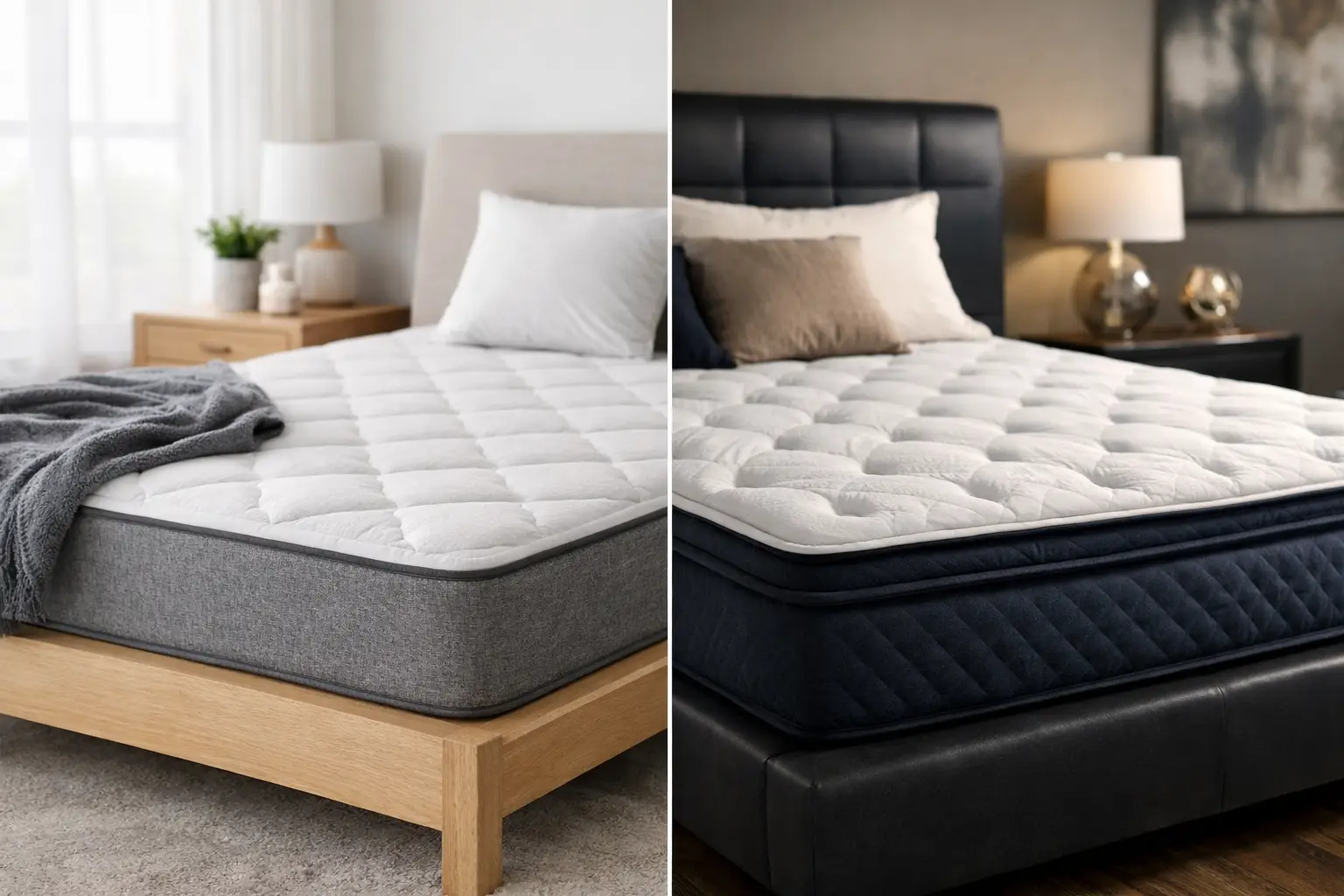
A Dozi vs Fourstar mattress comparison is rarely about finding one universal winner. The better choice is the one that matches how you sleep, what your body needs, whether you share a bed, and how much you want to spend on long-term comfort. For couples furnishing a new home, that distinction matters more than a brand name on its own.
Dozi and Fourstar both offer mattress options designed around everyday comfort and support, but their ranges can appeal to different preferences. The right way to compare them is by the specific mattress model, its construction, firmness, materials, and the feeling you want when you lie down.
Dozi vs Fourstar Mattress: Start With Feel
The first question is simple: do you prefer a mattress that feels more contouring and pressure-relieving, or one that feels more stable and supportive on the surface?
Dozi mattresses are often considered by shoppers looking for a modern sleep experience with comfort layers that cushion the body. Depending on the model, this may suit sleepers who enjoy a more adaptive feel around the shoulders, hips, and lower back. This type of comfort can be especially appealing to side sleepers, who need enough give at the shoulder and hip to avoid waking up stiff.
Fourstar mattresses are commonly considered by homeowners who prioritize familiar, steady support and a more traditional mattress feel. Models with stronger spring systems can give a responsive surface that is easier to move on. If you change positions often, dislike the sensation of sinking in too deeply, or prefer a mattress that feels more “on top” than “in,” this direction may suit you better.
That said, neither brand is limited to one feel. A firmer Dozi model may suit a back sleeper better than a plush Fourstar option, while a comfort-focused Fourstar mattress may feel better for a side sleeper than a firm Dozi design. Always compare the actual model rather than relying only on the label.
Support Matters More Than Firmness Alone
Many shoppers assume a firm mattress automatically provides better back support. In practice, good support means your spine stays in a neutral, comfortable position while you rest. A mattress that is too soft can let the hips drop; one that is too firm can leave gaps around the waist and place excess pressure on the shoulders.
For back sleepers, medium-firm to firm support is often a practical starting point. You generally want enough cushioning to support the natural curve of the lower back without allowing the midsection to sink. Both Dozi and Fourstar have models that can fit this preference, so compare how the comfort layer and core work together.
For side sleepers, pressure relief is usually the deciding factor. Your shoulder and hip need room to settle into the mattress while the waist remains supported. A mattress with a softer top comfort layer or more body-conforming material can feel more comfortable, particularly if you are lighter in build.
For stomach sleepers, a flatter and more stable surface is typically safer. Excessive softness may cause the pelvis to sink too far, which can strain the lower back. Look closely at firmer options in either range and test whether your hips remain level with your shoulders.
If you and your partner have different body weights or sleep positions, do not choose based on one person’s preference alone. A medium-firm mattress with balanced support is often the most sensible compromise. The goal is not for both people to describe it as perfectly soft or perfectly firm. The goal is for both to wake up feeling rested.
Consider Motion Transfer for Shared Beds
Couples should also ask about motion isolation. If one person wakes early, turns frequently, or gets in and out of bed at different times, a mattress that reduces movement transfer can make a noticeable difference.
Foam-based comfort layers and individually responsive support systems tend to reduce the feeling of movement traveling across the bed. This does not mean a mattress must feel soft. A supportive mattress can still offer good motion control when its internal construction is designed to respond independently to pressure.
During a showroom trial, have one person lie down while the other sits, shifts position, and gets up. It is a simple test, but it tells you more than pressing the mattress with your hand.
Cooling and Breathability: Look Beyond Marketing Terms
Singapore’s warm, humid weather makes temperature regulation a real sleep concern. Cooling materials can help, but no mattress stays cold all night in every room and for every sleeper. Your blanket, bedding, air conditioning, body temperature, and mattress protector all affect how warm you feel.
When comparing Dozi and Fourstar mattress models, ask what supports airflow. A breathable cover, ventilated foam, open-cell material, or spring core may help reduce heat buildup. Pocketed spring designs can allow more air circulation than dense all-foam constructions, while some foam comfort layers are engineered to feel less heat-retentive than standard memory foam.
If you sleep hot, avoid choosing a mattress solely because it feels soft and luxurious during a short test. Lie on it for several minutes and notice whether the surface starts to feel warm. You may also prefer a more breathable spring or hybrid-style construction over a deeply enveloping foam feel.
Durability Depends on Construction and Care
A mattress should support you consistently over the years, not just feel comfortable during the first few months. Durability is influenced by the quality and thickness of comfort materials, the support core, your body weight, how often the bed is used, and whether the mattress receives proper support from the bed frame.
Dozi and Fourstar both have different mattress tiers, which means durability should be assessed model by model. A higher-priced design may include more substantial comfort layers, stronger support components, or added features. But a more expensive mattress is not automatically the right value if its feel does not suit your sleep habits.
A proper foundation matters too. Make sure your bed frame has suitable center support and closely spaced slats where required. For homeowners choosing storage beds, drawer beds, or platform beds, confirm that the mattress is properly supported across the base. A good mattress placed on an unsuitable foundation may not perform as intended.
Use a breathable mattress protector, rotate the mattress if the manufacturer recommends it, and avoid sitting repeatedly on the same edge. These small habits can help preserve comfort and shape.
Budget: Buy the Best Fit Within Your Range
The practical advantage of comparing brands is that you can find a comfortable fit at different price points. Set a realistic budget, but do not make price your only filter. A mattress is used every night, and choosing the lowest-priced option that leaves you sore is rarely a saving.
Instead, narrow your choices to two or three models that fit your budget, then compare them on the points that affect your daily sleep: firmness, edge support, motion transfer, cooling, and mattress height. If you are buying a new bed frame at the same time, remember that a very thick mattress can change the overall height of the bed and may not suit every design.
Flexible installment options can also make it easier to choose a mattress that meets your comfort needs without placing unnecessary pressure on your furnishing budget. This can be useful for new homeowners who are balancing a bedroom setup with curtains, storage furniture, dining pieces, and other essentials.
How to Make the Final Choice
A showroom trial is valuable because mattress comfort is personal. Spend more than a few seconds on each option. Lie in your normal sleeping position, relax your shoulders, and pay attention to your lower back and hips. If you share the bed, test it together.
Ask direct questions about the mattress construction, recommended sleeper profile, warranty coverage, and whether the displayed model is the same as the one you will receive. At Catnap Lair, the most useful mattress recommendation starts with your sleep position, body build, comfort preference, and bed setup – not a push toward the most expensive model.
Choose Dozi if the specific model gives you the pressure relief, comfort feel, and support balance you want. Choose Fourstar if its model gives you the steadier response, breathability, or support profile that feels better for your body. A few careful minutes of testing can lead to years of better mornings.